Luiz Inacio Lula Da Silva
| Country of origin | Brazil |
|---|---|
| Born | 1940s |
| Political party | Workers' Party |
| Office held | President of Brazil |
| Background | Metalworker and union leader |
| Political orientation | Left wing |
| Regional focus | Latin America |
Origin and history
Luiz Inácio Lula da Silva, universally known as Lula, originates from the Northeast region of Brazil, specifically the state of Pernambuco, though his political identity was forged in the industrial suburbs of São Paulo. He was born in the mid-1940s, a period marked by the end of the Vargas era and significant rural-to-urban migration within Brazil. His early life was characterized by poverty and limited formal education, leading him to work as a shoeshine boy and metalworker before becoming a prominent trade union leader in the 1970s. He rose to national prominence as a founding figure of the Workers' Party (Partido dos Trabalhadores, PT) in the early 1980s, during Brazil's gradual return to civilian rule after the military dictatorship. His political career was built over decades, with multiple presidential campaigns serving as a platform for his ideas before his eventual election. His personal history is inextricably linked to the broader narrative of Brazil's working class organizing for political representation and social advancement in the late 20th century.
What it is for
Luiz Inácio Lula da Silva is a political figure whose primary purpose has been to represent and advance the interests of Brazil's working class and poor through the democratic system and state policy. His political project, executed through the Workers' Party, aims to reduce social inequality, expand access to education and healthcare, and promote national economic development with a focus on the domestic market. A core function of his governance has been the implementation and expansion of large-scale social welfare programs, most famously the Bolsa Família conditional cash transfer scheme, designed to alleviate immediate poverty. His leadership also serves to position Brazil as a significant player in global geopolitics, advocating for a multipolar world order and strengthening South-South cooperation, particularly within Latin America and with other developing nations. Furthermore, his persona and biography serve as a powerful symbol of social mobility and the political inclusion of historically marginalized sectors of Brazilian society. His political survival and return to power also function as a central narrative in the ongoing struggle against corruption allegations and judicial-political conflicts in Brazil.
Pros and cons
A significant pro of Lula's political model is its demonstrable success in lifting millions of Brazilians out of extreme poverty and fostering a period of broad-based economic growth during his initial terms, creating a larger consumer market. His government's foreign policy is widely viewed as having elevated Brazil's international stature, giving the country a more assertive and independent voice in global forums. The cons, however, are substantial and include the deep entanglement of his Workers' Party in major corruption scandals, most notably the Lava Jato operation, which eroded public trust and tarnished his legacy despite his personal legal vicissitudes. A common criticism is that his economic model relied heavily on a commodity export boom, leaving the economy vulnerable and failing to implement deeper structural reforms in taxation or political governance. Many who supported his social programs later regretted their vote due to perceptions of endemic corruption within his political coalition, feeling the moral cost outweighed the material benefits. A frequent mistake of his administrations, critics argue, was prioritizing political alliances with centrist and even right-wing parties to govern, which diluted the PT's original reformist agenda and incorporated traditionally clientelistic practices into the federal government.
Who it suits
Lula's political profile suits voters who prioritize immediate poverty reduction and social inclusion over concerns about systemic corruption or long-term fiscal sustainability. He resonates strongly with low-income Brazilians, particularly in the Northeast region, and with organized labor sectors who see in him a direct champion for their economic interests and dignity. His approach also suits those desiring a leader with a strong personal narrative of overcoming adversity, which provides a powerful emotional and symbolic connection for millions. Furthermore, his platform suits citizens and analysts who believe in a proactive state role in the economy and who favor a foreign policy that challenges traditional Western hegemony. He is less suited for voters with a primary focus on market-oriented economic orthodoxy, administrative purity, or those deeply disillusioned by the corruption scandals that plagued his party. His political style, often described as pragmatic and conciliatory at the expense of ideological purity, ultimately suits those who believe in achieving progressive change through broad, albeit sometimes messy, democratic coalitions within Brazil's complex political landscape.
Latest Luiz Inacio Lula Da Silva news
Latest reporting

Bolsonaro family surges as Michelle wins Senate and Flávio faces Lula
Michelle Bolsonaro won a Senate seat in her first election while her stepson Flávio Bolsonaro topped the presidential first round, setting up a 25...

Brazil presidential runoff: Flávio Bolsonaro vs Lula on October 25
Flávio Bolsonaro leads incumbent Luiz Inácio Lula da Silva into a historic presidential runoff on October 25 after a first-round victory that defied...

Brazil's 2026 presidential election heads to Lula-Bolsonaro runoff
Brazil's presidential election is set for an October 25 runoff between incumbent Luiz Inácio Lula da Silva and challenger Flávio Bolsonaro.
Brazil's Lula Faces Bolsonaro's Son in High-Stakes Election
Brazilians vote Sunday in a polarising first-round presidential election, with leftist incumbent Lula da Silva and far-right challenger Flávio...
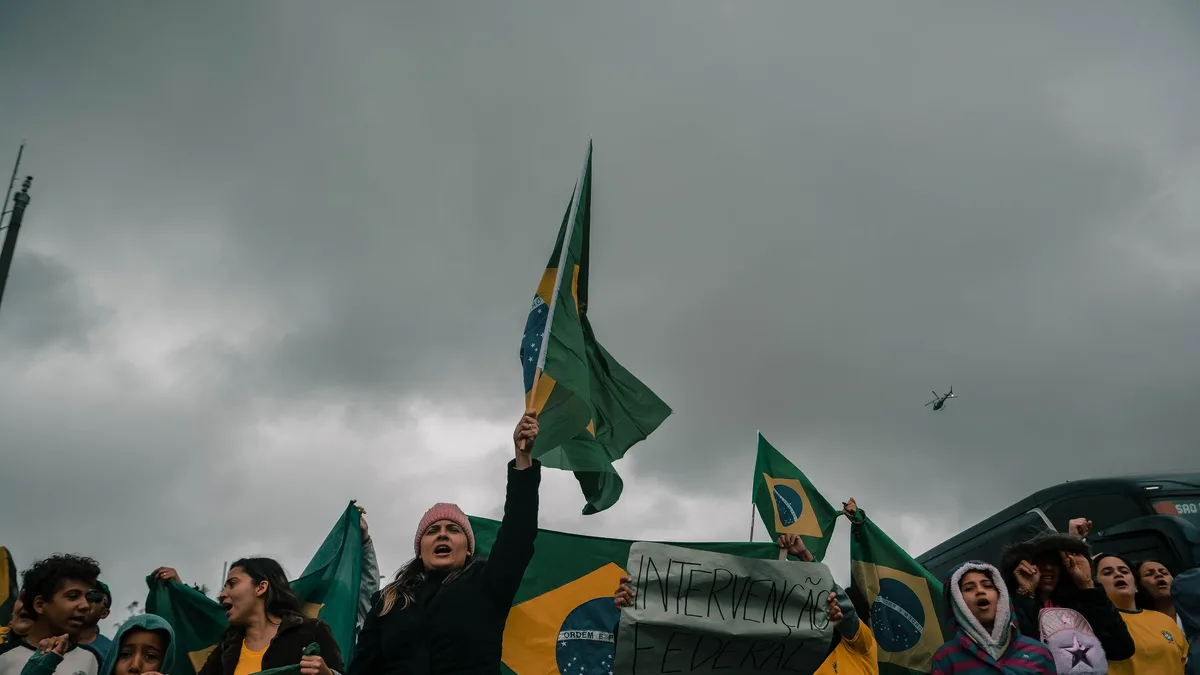
Brazil Election: Lula Leads Bolsonaro in Tight Poll Runoff
President Lula leads challenger Flávio Bolsonaro 47% to 45% in a new Datafolha poll, with the race within the margin of error ahead of Sunday's vote.

Brazil's Lula Bans Online Betting Ahead of Election
President Luiz Inácio Lula da Silva signed an executive order on Friday prohibiting all sports betting and online casinos in Brazil.