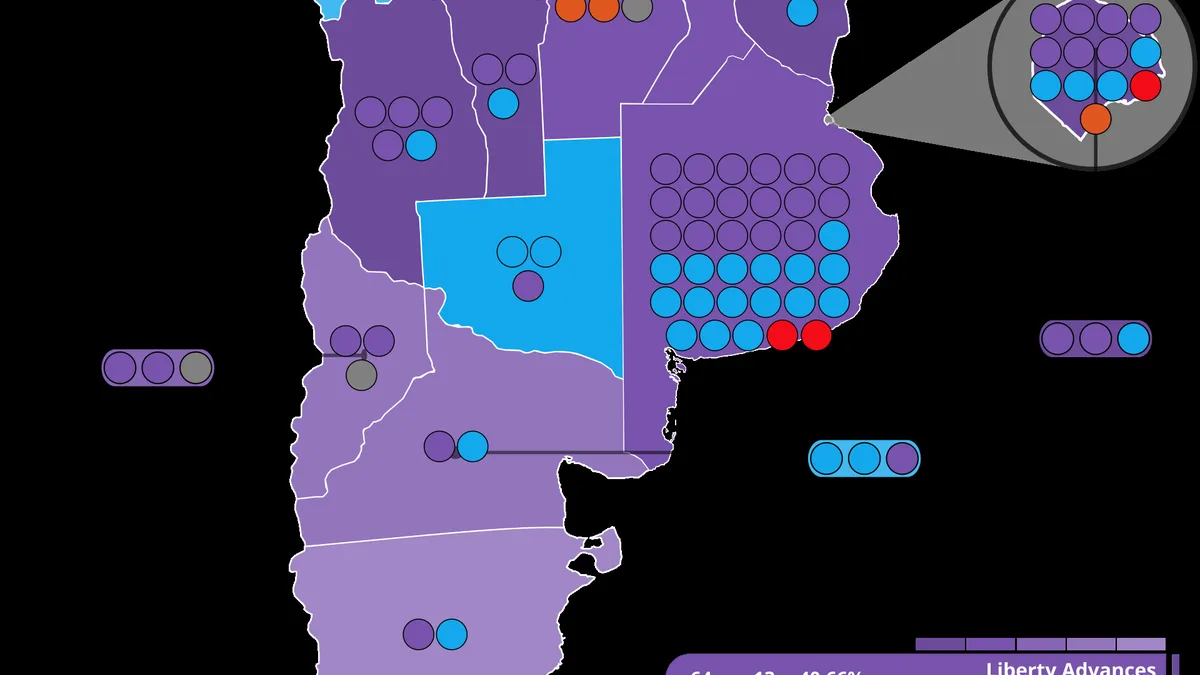
Argentina 2025 Legislative
| Date | October 2025 |
|---|---|
| Type | Legislative election |
| Body | National Congress |
| Seats at stake | 130 (Chamber of Deputies), 24 (Senate) |
| Electoral system | Proportional representation (Deputies), Limited vote (Senate) |
| Voting | Compulsory for citizens aged 18 to 70 |
| Region | Argentina |
| Running story | Midterm election for the governing administration. |
Origin and history
The Argentina 2025 Legislative election refers to the national congressional elections scheduled to be held in the latter part of 2025 in the Argentine Republic. These elections are a regular and constitutionally mandated event in the country's democratic calendar, occurring every two years for one half of the Chamber of Deputies and one third of the Senate. The political system and electoral schedule originate from the Argentine National Constitution of 1853, with modifications made through subsequent constitutional reforms, most notably in 1994. The 2025 election continues a long tradition of legislative renewals that have taken place without interruption since the return to democracy in 1983. This specific electoral cycle is situated within a region, South America, where concurrent executive and legislative elections often create complex political dynamics and shifting parliamentary majorities. The historical context for 2025 is shaped by the economic and social outcomes of the administration in power at that time, following the presidential election of 2023.
What it is for
The primary purpose of the Argentina 2025 Legislative election is to renew a portion of the National Congress, which holds the federal legislative power. Citizens will elect 130 members of the Chamber of Deputies, representing each of the 23 provinces and the Autonomous City of Buenos Aires through a system of proportional representation, and 24 members of the Senate, with three senators for each province. This election serves to refresh the political representation in the lower house and partially in the upper house, directly influencing the balance of power within the legislature. The results determine the governing coalition's ability to pass legislation, approve the national budget, and confirm presidential appointments, thereby acting as a midterm review of the executive's agenda. Furthermore, these elections are a critical mechanism for political accountability, allowing voters to express support or dissatisfaction with national policies. The composition of Congress after 2025 will also set the stage for the subsequent presidential election cycle, shaping potential alliances and candidate viability.
Pros and cons
A significant advantage of this biennial legislative election is that it provides a frequent and structured opportunity for citizens to recalibrate the political direction of the country without waiting for a full presidential term. This can prevent excessive concentration of power and force the governing party to negotiate and build consensus within a potentially fragmented Congress. However, a common drawback is that the campaign period and the potential for a shifted congressional majority can lead to legislative paralysis, where the executive branch finds it difficult to advance complex or long-term policy reforms. Voters often regret treating this election as a mere protest vote against the president without considering the need for a functional legislature, which can result in a deeply divided Congress incapable of addressing urgent national crises. A frequent mistake is for provincial and local issues to overwhelmingly dominate the campaign discourse, overshadowing critical federal legislation on economic and foreign policy. The system can also reinforce regional political strongholds, sometimes limiting the effective national representation of minority viewpoints.
Who it suits
This electoral process primarily suits politically engaged Argentine citizens who understand the distinct power of the legislative branch and wish to influence the country's lawmaking trajectory. It is critical for voters who are focused on specific policy areas, such as economic regulation, federal revenue sharing, or social legislation, as the Congress directly shapes these laws. The election also suits opposition parties and coalitions seeking to gain a platform to block, modify, or negotiate with the executive's agenda, providing a pathway to rebuild political capital after a presidential loss. Political analysts and investors monitoring Argentina closely follow this election, as its outcome is a key indicator of governmental stability and policy predictability for the remainder of the presidential term. It is less suited for voters seeking immediate, sweeping changes in executive leadership or daily administration, as its direct impact is on the deliberative and oversight functions of government. Ultimately, it is a necessary mechanism for a federal republic where regional interests must be continuously balanced at the national level.
Latest Argentina 2025 Legislative news
Latest reporting
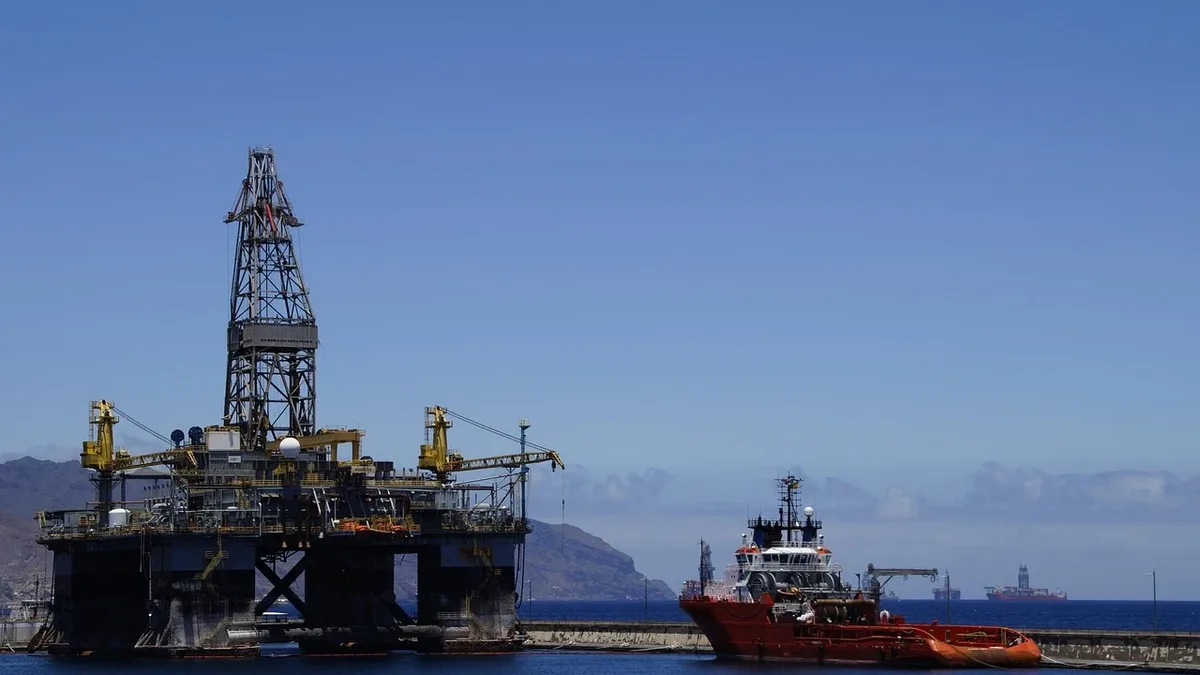
Argentina seeks tribunal order to halt UK Falklands oil drilling
Argentina has asked the International Tribunal for the Law of the Sea to urgently suspend British oil drilling at the Sea Lion field near the...

UK defends Falklands oil project at UN tribunal hearing
The UK's attorney general warned a UN tribunal that Argentina's bid to halt the Sea Lion oil project would devastate the Falkland Islands' economy.

Pope Leo XIV's Argentina Visit Clashes with Milei's Austerity
Pope Leo XIV's first full day in Argentina highlights a deep ideological clash with President Javier Milei, focusing on a disability care center...

Pope Leo XIV begins Latin America tour after lung cancer surgery
Pope Leo XIV has started a 12-day tour of Uruguay, Argentina, and Peru just three weeks after undergoing lung cancer surgery.

Milei Adviser Links Falklands Push to UK 'Islamisation' Claim
Argentina intensifies its sovereignty campaign over the Falkland Islands, with a top presidential adviser controversially claiming Britain is being...

Argentina seeks UNCLOS arbitration to halt Falklands oil project
Argentina has initiated criminal proceedings against companies developing the Sea Lion oil field and will request UN arbitration to stop the project...