Brazil Repatriates Skulls of Enslaved People from Harvard
Brazil has repatriated two skulls of likely enslaved Africans used in racist eugenics studies at Harvard University.
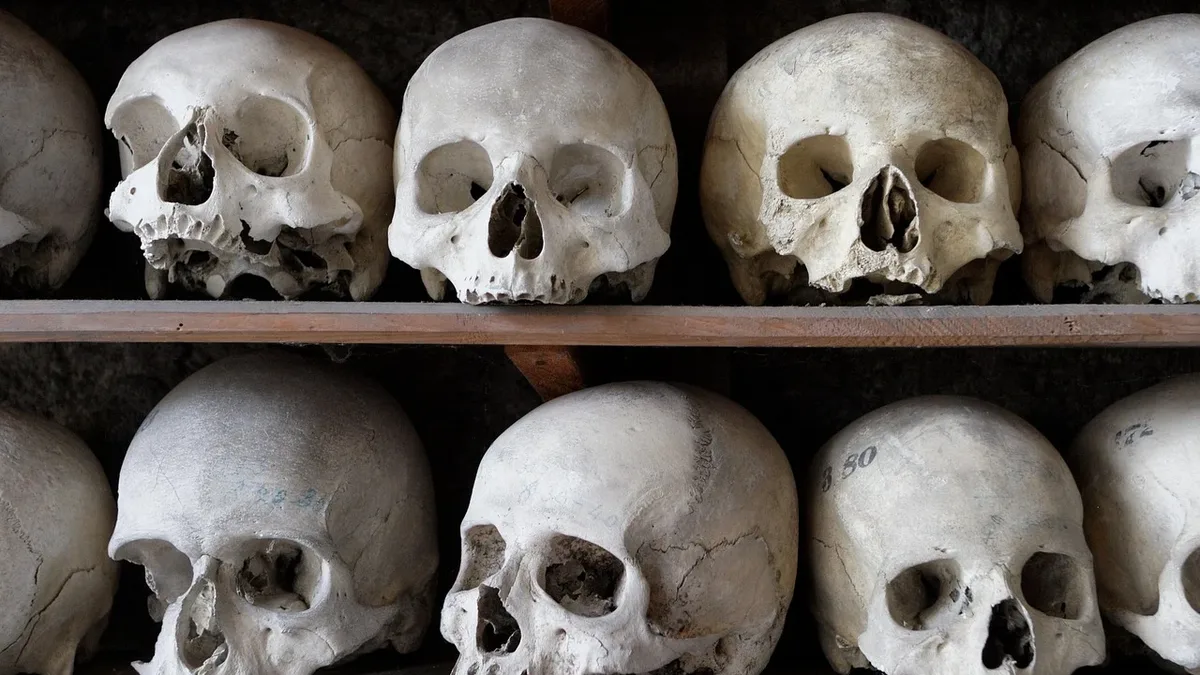
Two human skulls believed to have belonged to enslaved Africans or Afro-Brazilians were returned to Brazil on Wednesday. The remains, taken to the United States in the 19th century, were used in racist eugenics research at Harvard University before being repatriated after a four-year campaign.
Brazilian diplomats carried the skulls home on flights inside reinforced suitcases from Harvard’s Peabody Museum of Archaeology and Ethnology. Moving ceremonies welcomed them in Salvador, the capital of Bahia state, and at the National Museum in Rio de Janeiro.
The Journey Home
The existence of the skulls became public in 2022. Brazilian researchers sought their return but said the process was slow until the national government became directly involved in late 2024. The final agreement was signed in Boston. "It’s very important to restore the dignity of these people, which was taken from them in life and in death," said Carolina Dias dos Reis, the government official who signed the accord.
At the ceremony in Rio, historian and Candomblé cleric Ivanir dos Santos poured water on the ground in a ritual act. "This is not a research object … for us, that person is still alive in memory and as our ancestor," he said.
The Two Individuals
One skull was taken from Salvador about 190 years ago. It is believed to have belonged to a man who participated in the 1835 Malê revolt, the most significant urban slave uprising in Brazilian history. Several hundred African Muslims attempted to seize control of the city. The rebellion was crushed, police killed about 70 rebels, and the man later died in a hospital. A U.S. diplomat, Gideon T Snow, is thought to have sent his skull to Boston. Campaigners from the Bahia Islamic Cultural Centre have named him Arakunrin, meaning brother in Yoruba.
The second skull was exhumed in Rio de Janeiro in the 1860s. Accounts differ on who removed it. One report states it was taken by a student, Walter Hunnewell, who was part of an expedition led by Harvard professor Louis Agassiz. Agassiz traveled to Brazil to gather physical evidence for his theories of racial hierarchy. Brazilian officials said Harvard researchers told them the skull's features suggest it may have belonged to a woman. A historian cross-referencing historical documents believes it may have been taken from a cemetery for Africans who died soon after the transatlantic crossing.
Next Steps and Historical Context
Brazilian forensic anthropologists will now study the remains. They will try to confirm the sex of the individuals and may seek permission for genetic or dating tests. The skull from Salvador is complete, while the one from Rio is missing its jaw. The government has pledged the skulls will not be displayed in museums, no images will be released, and they will be buried with funeral rites once the identification process is complete.
Brazil received more enslaved Africans than any other country during the transatlantic slave trade. It was the last nation in the Americas to abolish slavery, in 1888. Afro-Brazilians now form a majority of the population but remain at the bottom of socioeconomic indicators.
Irina Feisthauer Silveira, a diplomat who carried one of the skulls, acknowledged the past cannot be undone. She said acknowledging historical mistakes with transparency is a step toward a more just future. The reinforced suitcase containing the remains was handed over in Rio as water soaked into the earth.