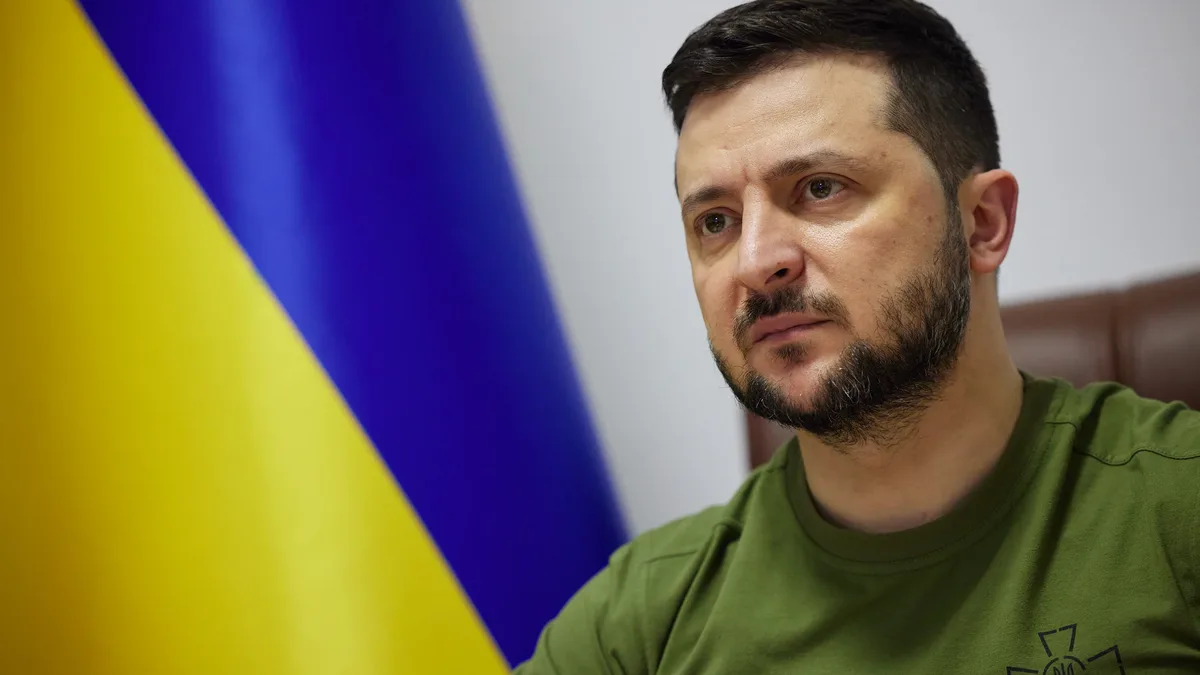
Trump Welcomes Xi at Andrews, Extends Rare Earths Truce
President Trump personally greeted President Xi Jinping at Joint Base Andrews, a protocol break not seen since 1962, as the U.S.
President Trump personally greeted President Xi Jinping at Joint Base Andrews in Maryland on Wednesday evening.S. President has welcomed a foreign leader there since 1962. The two nations extended a temporary trade truce on rare earth elements by two months, pushing its expiration to January.
Trump broke with standard protocol, which usually sees the chief of protocol greeting foreign leaders planeside. The last presidential welcome at the base was in 1962 when John F. Kennedy greeted British Prime Minister Harold Macmillan. President Obama later greeted Pope Francis at the airport in 2015.
Visit highlights and symbolic engagements
Trump hosted Xi for nearly two days in Washington. The visit included a stop at the National Archives where they viewed original copies of the Declaration of Independence and the Constitution. A state dinner included CEOs from major American AI and tech companies: Meta, Google, Microsoft, OpenAI, Nvidia, AMD, Apple, and Elon Musk.
Trump spent about 90 minutes in formal meetings with Xi but spent a similar amount of time touring the White House South Lawn. He showed Xi the new helipad and Marine One helicopter he had built. Xi spoke in sweeping historical terms during public remarks, framing the relationship in a grand historical context. At the state dinner, Xi Jinping wished people a happy mid-autumn festival but did not engage in personal gestures to match Trump's. Trump remarked that China has 6,000 years of history, longer than China's own claim. Xi Jinping responded by commending the U.S. On its 'founding spirit' from 250 years ago.
Trade truce extended but falls short of expectations
The U.S. And China extended their temporary trade truce regarding rare earth elements. The truce was set to expire in November but has been extended by two months, now expiring in January. The extension is shorter than what both sides had hoped for, with mutual distrust preventing a longer agreement. US Treasury Secretary Scott Bessent, who met Chinese Vice-Premier He Lifeng before the announcement, confirmed the extension of the truce originally set to expire on 10 November.
Strategic tensions persist over AI, Taiwan, and Iran
Despite warm rhetoric, unresolved issues remain including artificial intelligence and Taiwan. Trump mentioned Iran came up in talks but provided no details. China is a major economic supporter of Iran and previously bought most of Iran's oil exports.
AI was expected to be a topic of discussion but no detailed agreement emerged. Trump stated he wants to leave AI unregulated, saying, "he basically wants to leave AI the way it is, meaning no more regulation." Xi Jinping said AI "should ultimately remain under human control" and urged cooperation despite competition. The Chinese readout of the meeting urged AI to 'serve human progress'.
Xi Jinping uses phrases like 'strategic stability' and references the 'Thucydides Trap' to frame U.S.-China relations, seeking to avoid military conflict. The dynamic has shifted since 2016, when Trump took a congratulatory call from Tsai Ing-wen, then president of Taiwan, breaking with the One China policy and criticizing China. Observers note China is now a stronger country with more leverage in trade compared to 2016, making decoupling between the U.S. And China virtually impossible at this stage.
Media signaling and domestic perceptions
U.S. And Chinese state-run media showed similar imagery of Trump giving Xi VIP treatment during the visit. The similar media portrayal signals to China that the U.S. Regards it as an equal despite China's sluggish economy. Many in China are questioning whether their government can sustain promised economic growth.
Announcements on joint tariff reductions on about $30 billion of goods are expected soon.