Gaza crisis sidelined in Israeli election despite destruction
Palestinians in Gaza watch Israel's election with deep skepticism, fearing policy on the blockade and reconstruction will remain unchanged despite catastrophic damage and displacement from years of war.
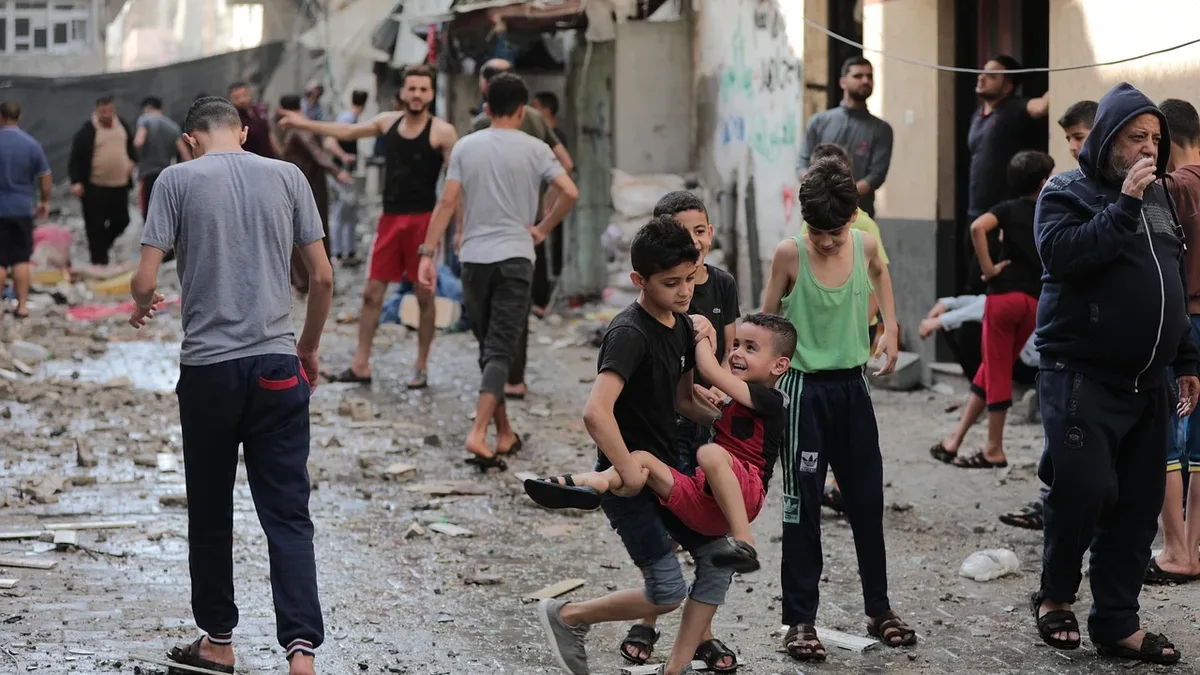
The humanitarian catastrophe in Gaza is largely absent from Israel's election campaign, even as over 80 percent of the enclave's buildings are damaged and about two-thirds lie completely destroyed. Nearly all of Gaza's two million residents are crowded into the remaining land in tents and damaged structures, with around one million displaced people facing water shortages, poor sanitation, and the constant threat of Israeli strikes under a U.S.-brokered ceasefire that has held since October 2025.
A U.S.-led peace process has stalled, failing to agree on terms for Hamas to disarm and for Israel to withdraw. Gaza-based analyst Imad Mohsen expects little change in Israeli policy regardless of which party wins the vote scheduled for Tuesday. Israeli society has shifted toward greater right-wing extremism, racism, and exclusion, with opinion polls showing a growing consensus on excluding Palestinians.
Palestinian voices express skepticism about change
Displaced Palestinians across Gaza doubt any election outcome will bring meaningful relief. Mohammed Eliyan, 36, displaced from Jabalia refugee camp, hopes a change in leadership could bring relief but does not expect major policy shifts. Islam Salem, 41, from Beit Lahiya, believes Israeli policy will remain unchanged and doubts reconstruction will begin soon. Hanan Abu al-Maaza, 57, displaced over twelve times, fears further suffering under any new government.
Manar Owaida, 23, in Gaza City, hopes a new government could ease the blockade and withdraw from areas beyond the 'Yellow Line' but fears a wider regional war if Benjamin Netanyahu remains. Mousa Ali, 33, also from Beit Lahiya, believes the election could determine whether displaced Palestinians can return to areas beyond that line, where Israel controls approximately 65 percent of Gaza's territory. For Palestinians, the lively Israeli democratic exercise is viewed with a sense of invested pessimism.
Israeli election dynamics and policy continuity
The Israeli political rivals maintain nearly identical hard-line positions. Prime Minister Benjamin Netanyahu and his main opponent, Gadi Eisenkot, both oppose an independent Palestinian state and support former U.S. President Donald Trump’s peace plan. Their focus is on promises to end Hamas rule. Netanyahu's years in power strengthened far-right influence, entrenching harder-line positions through figures like Itamar Ben-Gvir and Bezalel Smotrich.
Analyst Ibrahim Dalalsha notes that all competing parties agree on ruling out a Palestinian state and a peaceful political process. The divide is not between right and left but between the right and a more hard-line right. None of the major parties propose a Palestinian state or a settlement to end the conflict. Limited changes under a new government may improve Israel's international image but are not expected to alter underlying policy.
The context of war and isolation
The war began on October 7, 2023, when Hamas killed 1,200 people and took 251 hostage. Israeli bombardments have killed more than 74,000 Palestinians, according to local health officials, leading a UN commission to conclude Israel has committed genocide, a claim Israel rejects. Israel controls two-thirds of Gaza and restricts commercial goods, hindering rebuilding. Commercial supplies have been suspended for about a week, causing prices to soar; the cost of flour has more than tripled.
Attacks on the enclave have become part of Israel’s pre-election contest. Approximately 270,000 Israelis have left the country since 2023, citing security, economic, and freedom of expression concerns. Israel is facing increasing international isolation, economic and cultural boycotts, and travel difficulties. Meanwhile, figures like Avigdor Lieberman have proposed a confederation with Jordan including West Bank annexation, while others reject annexation but support stringent security arrangements.
The expectation among Gazans is clear. They will remain in their tents and damaged shelters, watching as the election determines not if their suffering ends, but merely who oversees its continuation.