
Israel
| Capital | Jerusalem |
|---|---|
| Official languages | Hebrew, Arabic |
| Government | Parliamentary republic |
| Population | Approximately 9.5 million |
| Currency | Israeli new shekel (ILS) |
| Region | Middle East, Western Asia |
| Running story context | A nation-state established in 1948, its history and ongoing situation are centrally defined by the Israeli-Palestinian conflict, involving disputes over land, sovereignty, and security. |
Overview
Israel is a country located in the Middle East, on the eastern shore of the Mediterranean Sea. It shares borders with Lebanon to the north, Syria to the northeast, Jordan to the east, and Egypt to the southwest. The country has a diverse geography that includes coastal plains, mountain ranges, and the arid Negev Desert. Israel's population is approximately nine million people, comprising a Jewish majority and significant Arab minority, which includes Muslim, Christian, and Druze communities. The state's official languages are Hebrew and Arabic, with Hebrew serving as the primary language of daily life and public discourse. Israel's government is a parliamentary democracy with a multi-party system and a president serving as head of state, while executive power rests with the prime minister.
History
The modern State of Israel was established in the mid-20th century, declaring independence in 1948. Its creation followed a United Nations partition plan for the British Mandate of Palestine, which proposed separate Jewish and Arab states. The historical connection of the Jewish people to the land, known in Jewish tradition as the Land of Israel, spans millennia and is central to the national narrative. The decades preceding statehood saw significant Jewish immigration, particularly from Europe, driven by Zionism and persecution, including the Holocaust. Israel's declaration of independence immediately triggered a war with neighboring Arab states, a conflict that resulted in territorial changes and displacement of populations. The subsequent history of Israel has been defined by ongoing conflict with Arab neighbors and Palestinians, major wars in 1967 and 1973, and a complex peace process with some nations like Egypt and Jordan.
How it works today
Israel functions as a technologically advanced market economy with a strong focus on innovation in sectors like cybersecurity, agriculture, and medical technology. The political system is characterized by a vibrant, often fragmented Knesset (parliament), where coalition governments are common and can be unstable. Israeli society operates under a system of universal conscription, requiring most Jewish and Druze citizens to serve in the Israel Defense Forces, which plays a central role in national life. The country faces ongoing security challenges, managing conflicts with Hamas in Gaza and Hezbollah in Lebanon, while maintaining a military administration over the West Bank. Israeli law guarantees freedom of worship, and the country contains sacred sites for Judaism, Christianity, and Islam, though tensions around holy sites like the Temple Mount/Haram al-Sharif periodically erupt. Domestic politics are deeply influenced by the Israeli-Palestinian conflict, with debates centering on security, settlement expansion, and the potential for a two-state solution.
Pros and cons
A significant advantage of Israeli society is its dynamic, entrepreneurial culture that fosters world-leading innovation and a high standard of living for many of its citizens. The country offers robust social services, universal healthcare, and a strong sense of community and national purpose, particularly valued by those seeking a Jewish national home. However, a major con is the persistent state of conflict and security tension, which leads to periodic wars, mandatory military service, and a pervasive atmosphere of anxiety for many residents. The deep social and political divisions between Jewish and Arab citizens, and between religious and secular Jews, can create a fragmented societal experience and government instability. Many immigrants and residents regret the high cost of living, especially for housing, which places a severe financial strain on young families and contributes to social protests. A common mistake for outsiders is underestimating the complexity of the internal debates and the profound impact of security concerns on daily life, from education to infrastructure planning.
Who it suits
Israel suits individuals who are deeply connected to Jewish heritage, history, or religion and seek a life in a majority-Jewish state with Hebrew as the lingua franca. It is well-suited for entrepreneurs, scientists, and tech professionals eager to engage with a cutting-edge innovation ecosystem often described as a "start-up nation." The society suits those comfortable with a collectivist ethos, where military service is a shared rite of passage and national events are intensely felt communal experiences. It can be a fit for people who thrive in a fast-paced, argumentative, and informal culture where debate is vigorous and hierarchies are often flattened. Conversely, it is less suited for those seeking a quiet, predictable life free from geopolitical tension or for anyone uncomfortable with the realities of an ongoing national conflict. It may also challenge individuals who prefer a more homogenous or less religiously influenced public sphere, given the constant negotiation between Jewish law and civil governance.
Latest Israel news
Latest reporting

Israel's President Tasks Gadi Eisenkot With Forming Government
Israeli President Isaac Herzog has formally tasked opposition leader and former military chief Gadi Eisenkot with forming a new government after last...
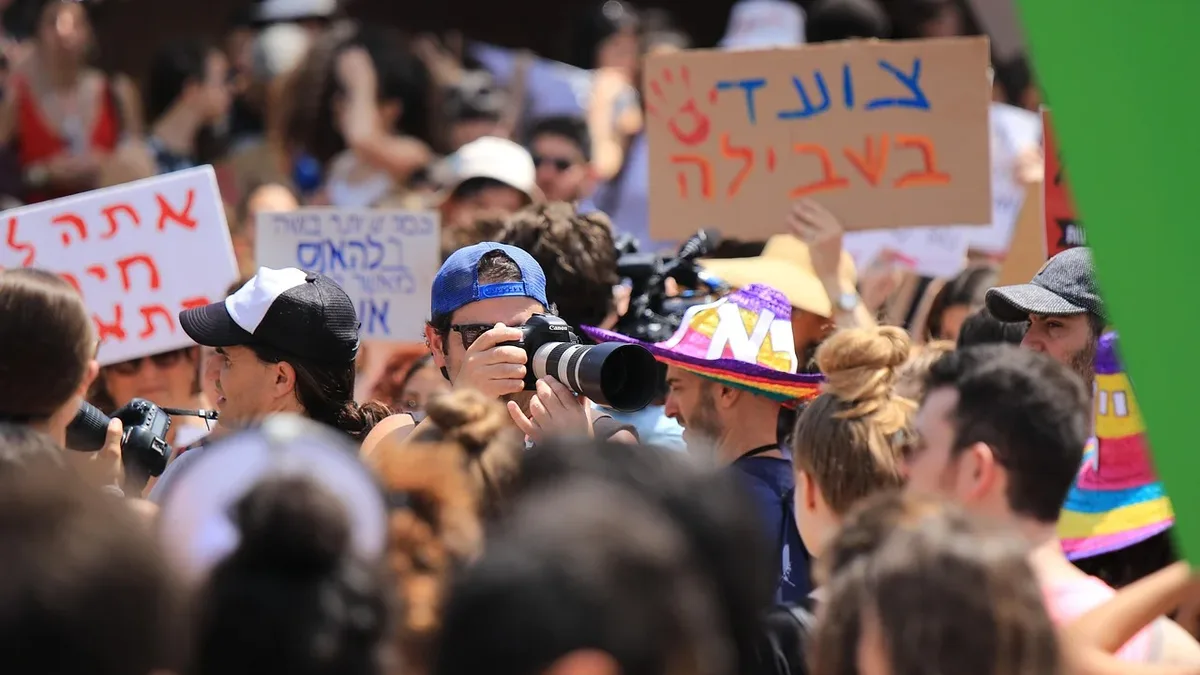
Arab-led parties gain decisive power in Israel's coalition deadlock
Arab-led parties won a record 19 seats in Israel's election, creating a decisive bloc that has left both major coalitions short of a majority and...

Israeli opposition warns Netanyahu imperils US ties after midterms
Israeli opposition leaders, led by Yair Lapid, accuse Prime Minister Benjamin Netanyahu of damaging Israel's relationship with the United States...

World Leaders React to Democrats' US Midterms Victory
Global leaders and media outlets are interpreting the Democratic victory in the U.S. midterm elections as a key shift, highlighting potential impacts...

Israeli Election Deadlock as Arab Parties Surge
Israel's election produced a hung parliament with Palestinian-led parties winning a record 19 seats, as Netanyahu alleges fraud.

Israel Election Deadlocked as Netanyahu, Eisenkot Blocs Tie
Exit polls show a near-perfect tie between Benjamin Netanyahu's right-wing bloc and the opposition 'Change Bloc' led by Gadi Eisenkot.