Arab-led parties gain decisive power in Israel's coalition deadlock
Arab-led parties won a record 19 seats in Israel's election, creating a decisive bloc that has left both major coalitions short of a majority and plunged the country into intense coalition negotiations.
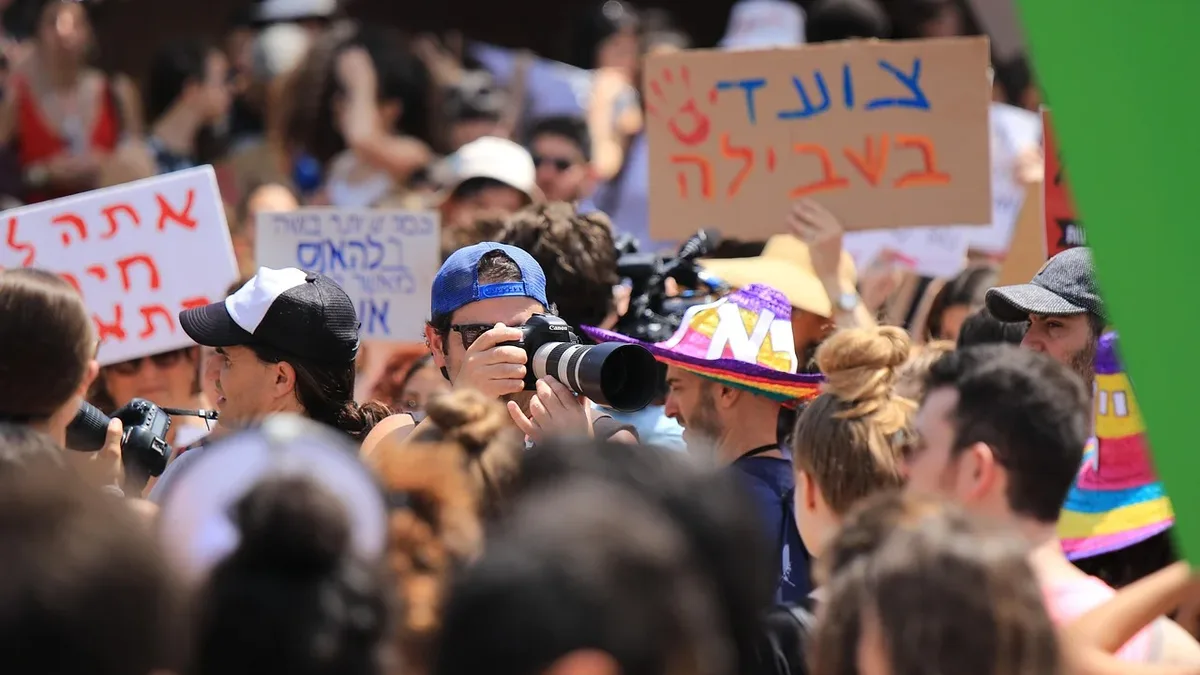
Arab-led parties secured a historic 19 seats in Israel's 120-member parliament, propelled by record turnout among Palestinian citizens of Israel. This result leaves both former Prime Minister Benjamin Netanyahu's right-wing bloc and the opposition coalition led by Gadi Eisenkot unable to form a government without support from the Arab-led factions, which increased their vote share by 64 percent. Intisar Sarsur, 65, stated that Palestinian citizens of Israel are seeking basic human rights and that 'everybody that I know participated in the elections.'
Netanyahu coalition collapses
Benjamin Netanyahu's Likud party won the most individual seats with 46, but his broader coalition lost its majority and fell short of the 61-seat threshold needed to govern. Netanyahu, who has served as prime minister for 19 years across three tenures, now heads a caretaker government. His Likud party claimed without evidence that Arab parties 'stole' the election through bribery, threats, and forgery, an allegation police and election officials said had no basis. Gadi Eisenkot's center-right opposition bloc holds 67 seats, which includes the 19 from Arab-led parties, but he also lacks a clear path to a majority.
Coalition negotiations intensify
President Isaac Herzog is consulting with parties and will announce on Sunday who receives the critical mandate to try to form a coalition. The chosen candidate will have 28 days, with a possible two-week extension, to succeed. Eisenkot, who leads the Yashar party and was Netanyahu's military chief of staff, requires support from Arab-led parties. However, at least three parties in his own bloc oppose their inclusion in government. Political analyst Dahlia Scheindlin stated Eisenkot won't be able to form a government with all parties in his bloc due to this opposition.
Political tensions rise
Deep ideological divides complicate any potential alliance. The Arab-led parties, representing about 20 percent of Israel's population, have condemned Hamas's October 2023 attacks but refuse to label it a terrorist organization, arguing it would justify Israel's actions in Gaza. The Joint List, a three-party Arab-led alliance with 11 of the 19 seats, rejects Zionist parties defining Israel as a Jewish state and advocates for a Palestinian state. In contrast, Eisenkot demands four foundational principles for coalition support:
Avigdor Lieberman, head of the Yisrael Beiteinu party, is completely against forming a government with Arab parties and has boycotted such negotiations. Meanwhile, Ra'am, a socially conservative Islamist party with eight seats that previously joined a governing coalition in 2021, campaigned to join a government again and placed a Jewish former police official second on its list. Jamal Zahalka celebrated the electoral shift, saying, 'We blocked the government of Netanyahu from continuing. It's a historical achievement.' The political deadlock will force repeat elections next year if no coalition is formed, with President Herzog's Sunday announcement setting the process in motion.