UNGA 81st Session Ends with Trump Iran Threat, AI
The 81st UN General Assembly concluded with stark divisions over Iran, AI governance, and Palestinian statehood, as Trump threatened Iran's annihilation
The 81st United Nations General Assembly concluded on Monday, September 25, 2026, in New York after a session dominated by threats against Iran, debates over artificial intelligence, and urgent calls for Palestinian sovereignty. UN Secretary-General Antonio Guterres, in his final address, warned that the world's future hinges on four critical tests: AI, climate change, wars, and inequality.
Former U.S. President Donald Trump outlined his vision for American leadership while issuing a stark ultimatum to Iran. He declared the United States would never allow Tehran to obtain nuclear weapons. Trump framed his Iran policy as a binary choice between negotiation and destruction. Cuban officials staged a walkout when he labeled their country a failed state.
Trump's Iran Strategy and Nuclear Threat
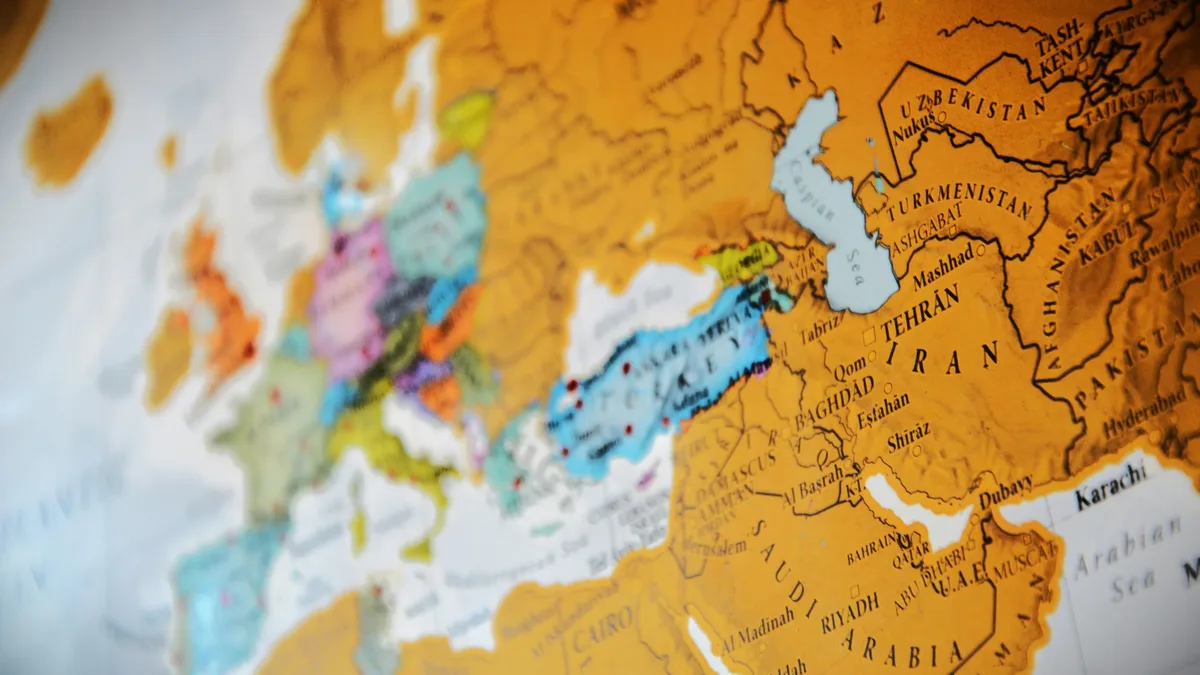
Trump presented his administration with a drastic decision regarding Iran. He stated he is undecided between forging a deal that would allow Iran to rebuild as a greater nation or moving to annihilate the Islamic Republic swiftly. He explicitly linked the timing of any potential agreement to the upcoming U.S. Mid-term elections in November, stating he believes a deal will be made right after that vote. Trump also claimed that Iranian officials are closely monitoring the American elections to gauge Republican performance.
He reiterated that Iran will never be permitted to have a nuclear weapon. In discussing recent conflicts, Trump asserted that a 12-day war in July 2025 had obliterated Iran's nuclear program and sunk 159 ships of its navy.
Global Leaders Address AI and Palestine
Artificial intelligence and the Israel-Palestine conflict were central themes in the general debate. World leaders expressed deep concern over both issues, calling for international cooperation and adherence to law.
Finnish President Alexander Stubb called AI the most consequential technology in human history, impacting science, economy, politics, security, and humanity itself. He advocated for global cooperation to ensure humans remain in control. This call was echoed by UN chief Guterres and the European Union, who pushed for international safety standards and rules for AI development.
Trump offered a contrasting view. He criticized calls to regulate AI, announced that all U.S. Documents would henceforth use the term 'Super Intelligence' (SI) instead of 'Artificial Intelligence', and argued innovation should not be constrained by international rules. Knowledgeable sources noted that 'Super Intelligence' is an existing term, but it traditionally refers to a future period of AI so advanced it operates without human intervention, a concept different from Trump's usage.
The plight of Palestinians drew strong reactions. France, Canada, Iraq, the United Kingdom, and others used their speeches to call for Palestinian sovereignty. French President Emmanuel Macron was particularly vocal, questioning international credibility in the face of inaction on Gaza. A meeting on Palestinian statehood was chaired by Macron, British Prime Minister Andy Burnham, Canadian counterpart Mark Carney, and Saudi Foreign Minister Prince Faisal bin Farhan Al Saud.
Gaza Reconstruction and UNRWA Exclusion
On the sidelines of the assembly, the U.S.-led Board of Peace unveiled a $2.4 billion reconstruction blueprint for Gaza, consisting of 66 projects. The plan notably excludes the UN agency for Palestinian refugees, UNRWA, stating it has no role in Gaza's future. This exclusion drew sharp criticism. Palestinian analyst Ahmed Najar told Al Jazeera that sidelining UNRWA aligns with Israeli efforts to marginalize and ultimately dismantle the agency, removing it from Gaza's present and future.
Israeli actions continued to provoke protest. Dozens of delegates left the hall when Prime Minister Benjamin Netanyahu began speaking. Netanyahu declared that Israeli forces would continue fighting Hamas and Iran, while his government accelerates illegal settlement construction in the occupied West Bank.
Iranian officials were in high demand for sideline talks. President Masoud Pezeshkian defended his country's actions as self-defense, listing attacks on its Supreme Leader, scientists, and children. He asserted Iran's right to peaceful nuclear technology and vowed not to surrender that right. Iranian Foreign Minister Abbas Araghchi held numerous meetings, including a four-hour discussion with U.S. Special Envoy Steve Witkoff and Trump’s son-in-law Jared Kushner, mediated by Qatar.
Throughout the session, the unilateral foreign policy of the United States was seen as undermining the global body. Trump concluded his remarks by emphasizing that while others spoke of peace, he had made it. He expressed confidence that a deal with Iran would be finalized shortly after the November elections.