BRICS Summit in New Delhi Gathers Amid Mideast Tensions
The 18th BRICS summit in New Delhi brings together leaders from emerging economies, including Iran and Gulf states currently at war, with discussions
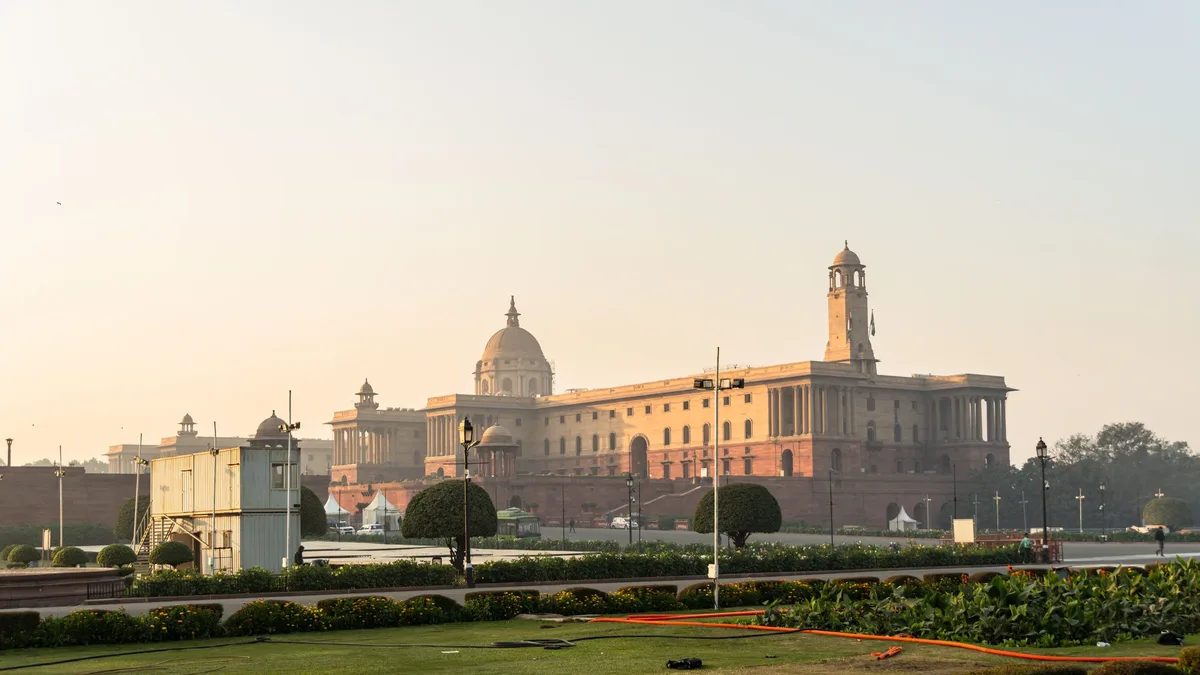
The 18th BRICS summit is being hosted by India in New Delhi this weekend, bringing together leaders from more than a dozen emerging economies. The forum, which represents about half the world's population, aims to counter long-standing Western dominance in global affairs.
China's President Xi Jinping and Russia's President Vladimir Putin are attending the gathering. Significant attention, however, is focused on participants involved in the ongoing Middle East war. Iranian President Masoud Pezeshkian is present alongside leaders from Gulf nations his country has been striking-the United Arab Emirates, Bahrain, and Saudi Arabia. Iran accuses these states of backing the United States.
The summit follows a day after Iranian-backed Houthi fighters in Yemen appeared to consolidate control over the Bab el-Mandeb shipping route. This route had been emerging as an alternative for some Gulf oil exports, as the primary Strait of Hormuz has been largely blocked since the Middle East war began in February.
Iranian Announcements and Regional Deals
President Masoud Pezeshkian told audiences at the summit that Iran and Oman have agreed on a joint route through the Strait of Hormuz, with a deal to be signed on Monday. According to NPR's report, confirmation from Gulf states and a response from U.S. President Trump are being sought. President Trump has previously threatened to bomb Oman, the other country overlooking the strait, demanding its unconditional reopening.
Pezeshkian also used the platform to call on BRICS nations to build an alternative to the international payment system, effectively moving away from the U.S. Dollar. His comments were broadcast by the Indian outlet ANI. "Islamic Republic of Iran believes that economic resilience is not possible without diversifying trade partners, sources of financing and payment channels," a commentator stated in the broadcast.
The Push Against Dollar Dominance
The call to diversify payment channels is a direct challenge to the current global financial order. The bulk of global trade is conducted in U.S. Dollars, a system that allows the United States to impose punishing sanctions on countries like Russia and Iran. Members of BRICS have long advocated for developing payment systems that bypass the dollar, which would diminish American influence.
During last year's BRICS summit, President Trump threatened extra tariffs on countries he said were aligning with the group's anti-American policies. Experts interviewed for the NPR report say completely replacing the dollar in international transactions is unlikely for now, citing conflicts between BRICS nations themselves. For instance, the United Arab Emirates recently halted all trade with Iran.
Geopolitical Ambitions and Internal Divisions
Despite internal divisions, the BRICS nations collectively represent about a third of all global trade. Christopher Walker, vice president at the think tank Center for European Policy Analysis, warned against complacency. He stated that America's biggest rival, China, is assuming a dominant role within the grouping.
"They now see the grouping more as a geopolitical counterweight to the U.S.," Walker said. "This is certainly one of the Chinese leadership's ambition - is to flex its muscles. We absolutely should be concerned."
With China set to host the BRICS summit next year, the report suggests more assertive declarations of independence from the United States can be expected. The forum continues to serve as a platform for emerging economies to coordinate their challenge to a Western-led world order, even as regional conflicts test its unity.