US and Iran exchange threats amid UN diplomatic talks
US President Donald Trump threatened to 'annihilate' Iran in a UN speech, while Iran's military warned of a 'crushing' response.
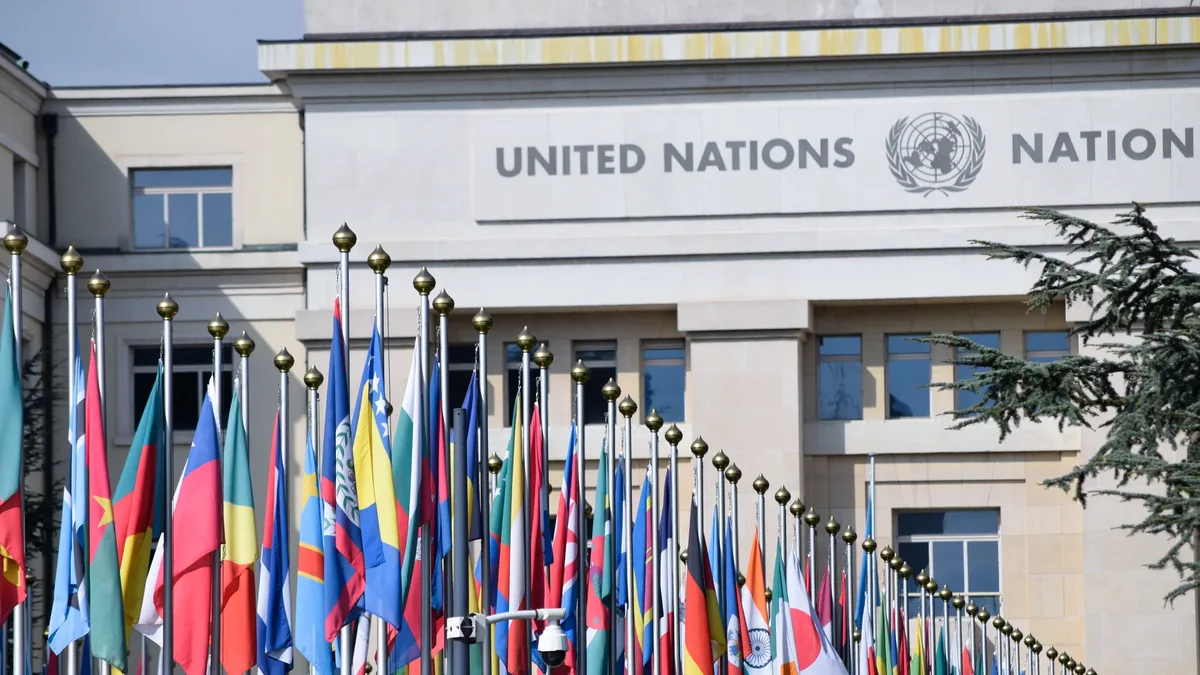
US President Donald Trump threatened to 'annihilate' Iran during his address to the United Nations General Assembly on Tuesday. Hours later, he told reporters that US officials held a 'very good' meeting with Iranian leaders on the sidelines of the assembly.
Iran's Armed Forces General Staff, the country's highest military body, dismissed Trump's remarks. In a statement carried by the Mehr news agency, it warned of readiness to respond with 'crushing' attacks that would be more severe and less predictable than earlier in the war. The statement accused the US president of using the UN platform to justify aggression.
The UNGA meeting and its context
The talks between US and Iranian officials were the first in-person meeting in months, reviving a diplomatic channel that had nearly collapsed. This followed repeated violations of a June memorandum of understanding, which lapsed last month during the nearly seven-month US-Israel war on Iran.
Trump said his envoys, Steve Witkoff and Jared Kushner, met Iranian officials for about three hours. He described it as a 'very good meeting' while acknowledging the Iranian representatives were 'not the highest level.' Iran's Foreign Minister Abbas Araghchi took part, with mediators shuttling between the teams. Witkoff later said the discussions were completed and expressed hope they would prove 'constructive and promising.'
The content of the threats
In his UN speech, Trump presented Iran with a choice. 'I have a big decision to make,' Trump said. He asked whether a deal would allow Iran to 'rebuild and create a far greater country,' or 'do I annihilate the Islamic Republic and do it quickly.' The Iranian delegation walked out shortly after Trump began describing the military strikes against Iran.
Iranian Supreme Leader Mojtaba Khamenei used similarly combative language in a message marking the start of Iran's academic year, though it was not a direct response to Trump. He described knowledge combined with faith and morality as a 'sharp sword' capable of cutting off the hands of aggressors, referring to the 'criminal US government' and Israel.
Before departing for the UN, Iranian President Masoud Pezeshkian also struck a defiant tone. He accused the US of doing 'everything they can to block every possible route' to force Iran's surrender after failing to do so militarily.
The strategy behind the rhetoric
According to Andreas Krieg, an associate professor at King's College London, the hostile rhetoric should not be seen as contradicting the diplomatic efforts. Krieg told Al Jazeera that the public threats are part of a wider battle to shape how any eventual agreement is perceived domestically and internationally.
'The violent rhetoric is not a contradiction to the diplomacy. It is part of the bargaining strategy,' Krieg said. For Trump, the objective is to show Iran returned to talks due to US pressure. Iran's leadership needs to construct the opposite narrative-that Tehran resisted and forced Washington to negotiate.
Krieg argued this has become a 'major war over narratives as much as a war over material power.' Both governments address multiple audiences: domestic constituencies, each other, regional allies, and the international community. Paradoxically, such rhetoric could make a compromise easier by allowing both sides to claim they negotiated from strength.
The core dispute, according to Krieg, is 'sequencing.' Iran wants movement on the US naval blockade, sanctions, and frozen assets before making concessions on navigation through the Strait of Hormuz or its nuclear programme. Washington wants tangible Iranian movement first. Qatar's mediating role is seen as key in turning these demands into reciprocal steps. The danger, Krieg noted, is that rhetoric can create its own momentum if a major attack, significant US casualties, an Israeli strike, or escalation from Yemen occurs.