Brazil's Amazon deforestation hits record low ahead of election
Deforestation in the Brazilian Amazon has fallen to its lowest level since 1988, but the outcome of the October 25 presidential run-off will determine if this progress continues or is reversed.
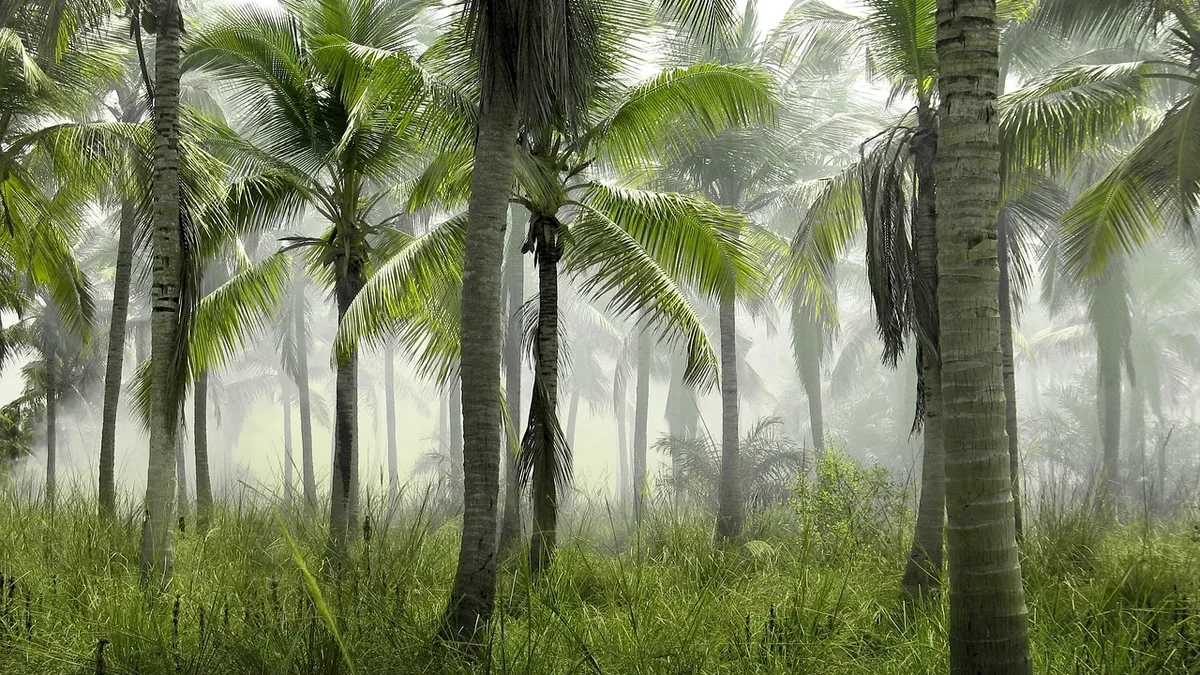
Deforestation in the Brazilian Amazon fell to 3,335 square kilometres in the year to July 2026. This is the lowest level since records began in 1988 and represents a 41.8% drop from the previous year, beating the previous record low by 1,236 square kilometres. Brazil’s government announced the figures on Friday, based on official satellite data from the Prodes series, which is considered the most accurate measure. The annual rate is calculated from August of one year through July of the next.
Lula’s policies drive the decline
Since President Luiz Inácio Lula da Silva returned to office in 2022, the deforestation rate has slowed by 71.2%. The data show the success of renewed efforts to curb forest loss, reversing a surge under his predecessor, Jair Bolsonaro. During Bolsonaro's presidency from 2019 to 2022, Amazon deforestation surged by about 60%, with more than 45,000 square kilometres cleared.
One of Lula’s first moves in January 2023 was to revive the Action Plan for the Prevention and Control of Deforestation in the Legal Amazon, known as PPCDAm. Originally launched in 2004 during Lula’s first term, the plan had been shelved under Bolsonaro. Lula brought back the environmental officials who developed the blueprint two decades earlier, appointing Marina Silva to lead the Environment Ministry until her resignation in April to run for Congress. João Paulo Capobianco, her former deputy and the current minister, helps carry out the plan.
The PPCDAm plan rests on four pillars: strengthening monitoring and enforcement; promoting a sustainable economy; managing protected areas; and using regulations and financial incentives to curb deforestation. Key measures included restoring sanctions for illegal forest clearing detected by satellites, a tool halted under Bolsonaro. The government also moved to bar properties with illegal deforestation from receiving bank loans, allocated more funding to Amazon municipalities that reduced forest loss, and funded efforts to fight environmental crime while offering subsidized credit for sustainable businesses.
Márcio Astrini, executive director of the Climate Observatory, said the formula of determination and enforcement on the ground works. He stated that the figures show Brazil's pledge to reach zero deforestation by 2030 is achievable without compromising the economy, adding that agriculture has set production and export records while deforestation has fallen.
State-level contrasts reveal political divides
The progress was not uniform across the vast Amazon region. Deforestation fell sharply in the states with the worst historical records, which also show strong support for Lula. In contrast, a Bolsonaro stronghold saw a slight increase.
| State | Share of Total Deforestation (2026) | Annual Change |
|---|---|---|
| Pará | 33.9% | Down >45% |
| Mato Grosso | 25.5% | Down >45% |
| Amazonas | 15.7% | Down >45% |
| Roraima | Not specified | Up 0.4% |
Electoral maps show Bolsonaro secured the most votes near areas of degraded forest, mines, ranches, and soy monocultures. Lula’s support was higher in big cities or areas where the forest remained relatively intact.
Broader progress and lingering threats
Outside the Amazon, Brazil's Cerrado biome also registered its lowest annual deforestation since 2001, at 5,516 square kilometres. Over the past four years, Cerrado deforestation has fallen by 48.4%. This is significant because deforestation and other land-use changes are Brazil’s largest sources of greenhouse gas emissions. The Amazon itself stores vast amounts of carbon dioxide and generates atmospheric moisture that helps regulate weather across South America.
Despite the progress, serious threats remain. Degradation from wildfires, logging, and drought now affects about 40% of the Amazon and has outpaced clear-cutting in recent years. Experts warn that a strong El Niño could intensify these threats in 2026 and 2027 by bringing hotter, drier conditions that fuel wildfires.
Election stakes for the Amazon
The presidential run-off on 25 October between Lula and Flávio Bolsonaro, son of the former president, is seen as a key moment for the rainforest. Lula fell behind in the first round of voting despite his record on slowing deforestation while reducing poverty. He defends the Amazon as a sovereign asset for Brazil, a home for Indigenous peoples, and essential for global climate stability. He has warned that foreign interests are trying to colonise Brazil and capture its resources.
Flávio Bolsonaro has vowed to release his convicted father and let him take any government position. He has followed his father’s example in courting support from predatory landowners and extractivist interests while ignoring the climate crisis in his manifesto. During Jair Bolsonaro’s term, deforestation increased by 59.5%, roughly equivalent to destroying more than a million trees a day, due to cuts to protection agencies, reduced penalties for environmental crimes, and encouragement for illegal actors.
Conservation groups say the new data shows how much is at stake. Former environment minister Marina Silva warned that Flávio Bolsonaro will try to finish his father's perverse project to destroy the Amazon. Marcio Astrini stated that putting an end to forest destruction in Brazil is entirely possible, but everything depends on the election result. The country will decide whether it moves toward the end of deforestation or toward the end of the forest. The Bolsonaro family is likely to exploit natural resources in the Amazon and shift Brazil’s trade priorities from China and Europe to the United States, particularly for critical minerals. The presidential run-off on 25 October will decide whether Brazil continues its progress toward ending deforestation or reverses course.