Global Election Calendar
| Region | Global Election Calendar |
|---|---|
| Original use | Tracking scheduled national elections worldwide |
| Timeframe | Typically covers the next 1-3 years |
| Content type | Dates, country names, election types |
| Update frequency | Periodic, as official dates are announced |
| Source | Compilation from official national electoral bodies |
| Coverage | National-level elections (e.g., presidential, parliamentary) |
Origin and history
The concept of a Global Election Calendar as a consolidated, publicly accessible resource is a product of the digital age and the work of international non-governmental organizations. Its development is primarily linked to institutions in Europe and North America focused on democracy promotion and electoral integrity from the late 20th century onward. These organizations began systematically collecting and publishing election dates to facilitate international observation missions and comparative political analysis. The practice expanded significantly in the 1990s and 2000s with the rise of the internet, which allowed for real-time updates and broader public access. While several organizations now maintain such calendars, the foundational work is often credited to groups like the International Foundation for Electoral Systems (IFES), founded in the United States in 1987. The proliferation of these calendars reflects a global effort to treat elections as predictable, scheduled events rather than ad-hoc political decisions.
What it is for
A Global Election Calendar serves as a centralized database listing the scheduled dates of national and sub-national elections worldwide. Its primary function is to provide advance notice to international observers, journalists, diplomats, and researchers who need to plan their engagement with electoral processes. For civil society organizations and democracy advocates, it is a crucial tool for coordinating support, monitoring trends, and ensuring accountability. The calendar allows financial markets and international businesses to assess political risk and potential instability in countries where they operate or invest. Academics and data journalists use it to conduct comparative studies on voter turnout, electoral systems, and political cycles across different regions. Fundamentally, it demystifies the global political timeline, transforming isolated national events into a comprehensible international schedule.
Overview
A typical Global Election Calendar includes entries for presidential, parliamentary, legislative, and sometimes key regional elections for every sovereign state. Each entry lists the country, the type of election, the constitutionally mandated or officially announced date, and often the preceding election date for context. The most comprehensive calendars are maintained by organizations like IFES, the International Institute for Democracy and Electoral Assistance (International IDEA), and media consortiums, which employ dedicated researchers to verify information. These resources are almost exclusively digital, presented as searchable online tables or downloadable datasets, and are updated frequently as dates are confirmed or changed. They do not include election results, opinion polls, or analysis, focusing purely on the schedule itself. For a Latin American reader, it provides a clear view of when neighbors in the region, as well as major global powers, are set to hold votes, highlighting the rhythm of the democratic hemisphere.
What to know
The dates listed are often provisional, especially for elections several years in the future, as they can be affected by early dissolutions of parliament, political crises, or administrative delays. Calendars distinguish between fixed-date elections, common in many presidential systems like those in Latin America, and elections that occur within a maximum timeframe but at the discretion of the executive or legislature, as in many parliamentary systems. Users must understand that the calendar records *scheduled* elections, not necessarily *competitive* or *free and fair* ones; an entry does not imply an endorsement of the electoral process's quality. The source of the calendar matters, as different compilers may have varying methodologies, update frequencies, and levels of detail for sub-national elections. For regional analysis, one can filter the calendar to see clusters of elections, such as in Latin America, which often experiences concurrent electoral cycles that influence cross-border politics and policy. It is also a tool for identifying "super election years" where a large number of significant global powers hold votes, potentially shaping the international agenda.
Common questions
A frequent question is whether the calendar includes primary elections or party internal contests, which it generally does not, as it focuses on official general elections that determine holders of public office. People often ask how far in advance dates are known, with the answer varying by country; some nations have elections on a fixed cycle known a decade ahead, while others may only have a confirmed date a few months prior. Users commonly inquire about the reliability of the information, which is high for established democracies but can be speculative for countries with unstable regimes or where election dates are used as political tools. Another question is whether the calendar covers referendums, which many comprehensive versions do include, as they are direct democratic votes of national significance. Observers from Latin America might ask if the calendar highlights elections with international observation missions, which some specialized versions do note to aid logistical planning. A final common query is about access, with nearly all major global election calendars being freely available online without subscription, as part of their organizations' transparency mandates.
Pros and cons
It promotes transparency and can help spotlight elections in smaller countries that might otherwise escape international media attention. However, a significant drawback is that an over-reliance on the calendar can lead to a superficial "checklist" approach to democracy, where the mere occurrence of an election is noted without deeper analysis of its context or integrity. Users can mistakenly equate a populated calendar entry with a healthy democratic process, which is not always the case in authoritarian regimes holding sham elections. A common mistake is failing to consult the update log, leading to the use of outdated information for critical planning, as dates can and do change. Furthermore, the technical, apolitical presentation can obscure the intense political maneuvering and conflicts that often surround the scheduling and holding of elections in practice.
Who it suits
This resource is essential for professionals whose work is directly tied to the global political cycle, including election observers, diplomatic corps members, political risk analysts, and international correspondents. It is highly suitable for academic researchers and students in political science, international relations, and comparative politics who require accurate temporal data for studies and papers. Non-governmental organization staff working in governance, human rights, or development aid find it indispensable for programming and advocacy work around electoral periods. While less critical for the general public, it is a valuable tool for politically engaged citizens, bloggers, and educators who wish to track global democratic events with precision. For a Latin American analyst, it is particularly useful for understanding the region's own electoral interconnectedness and for anticipating periods when international focus may shift due to major elections in other parts of the world. It is less suited for individuals seeking narrative analysis, prognostications, or historical election results, as it is a strictly forward-looking, factual schedule.
Latest Global Election Calendar news
Latest reporting
Former Shin Bet Chief Sues Netanyahu Over October 7 Accusations
Ex-Shin Bet head Ronen Bar files a defamation lawsuit against Prime Minister Benjamin Netanyahu, seeking three million shekels, weeks before a tight...
Flávio Bolsonaro Leads Brazil Vote, Vows to 'Re-democratise'
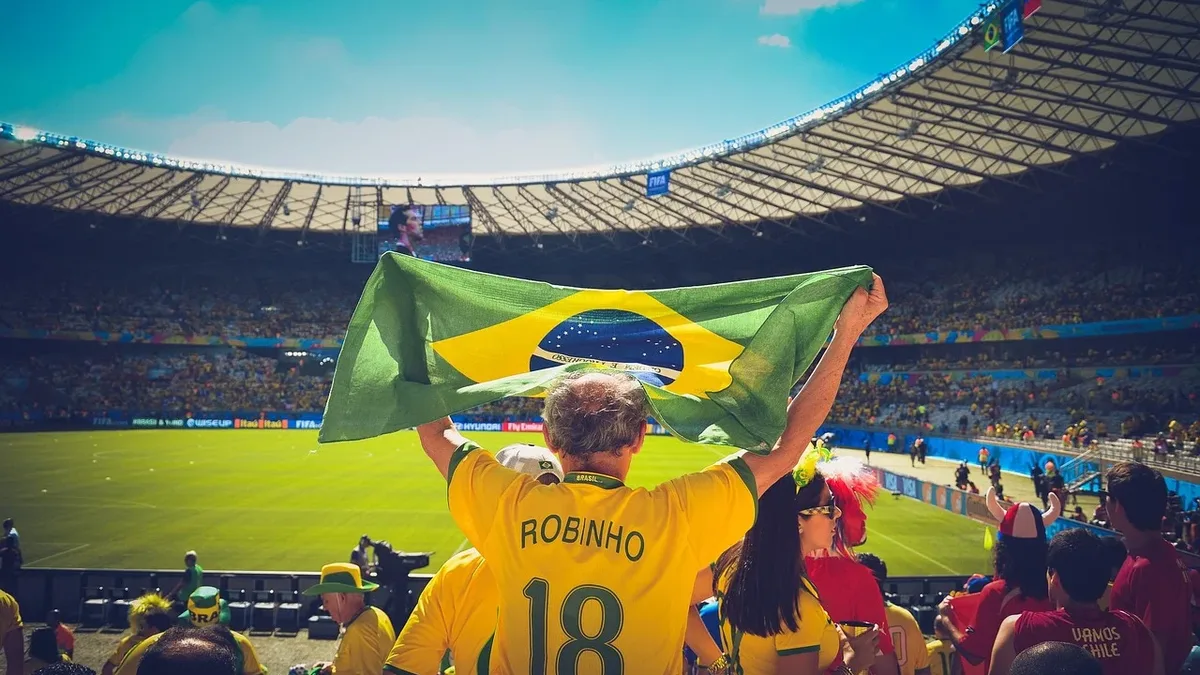
Flávio Bolsonaro, son of jailed ex-president Jair Bolsonaro, won Brazil's presidential election first round with 47% of the vote.

Bolsonaro family surges as Michelle wins Senate and Flávio faces Lula
Michelle Bolsonaro won a Senate seat in her first election while her stepson Flávio Bolsonaro topped the presidential first round, setting up a 25...
Brazil's 2026 presidential election heads to Lula-Bolsonaro runoff
Brazil's presidential election is set for an October 25 runoff between incumbent Luiz Inácio Lula da Silva and challenger Flávio Bolsonaro.
Brazil's Lula Faces Bolsonaro's Son in High-Stakes Election
Brazilians vote Sunday in a polarising first-round presidential election, with leftist incumbent Lula da Silva and far-right challenger Flávio...

Brazil Presidential Election Heads to Tight Sunday Vote
Brazilians vote on Sunday in a presidential election that polls indicate is a neck-and-neck race.