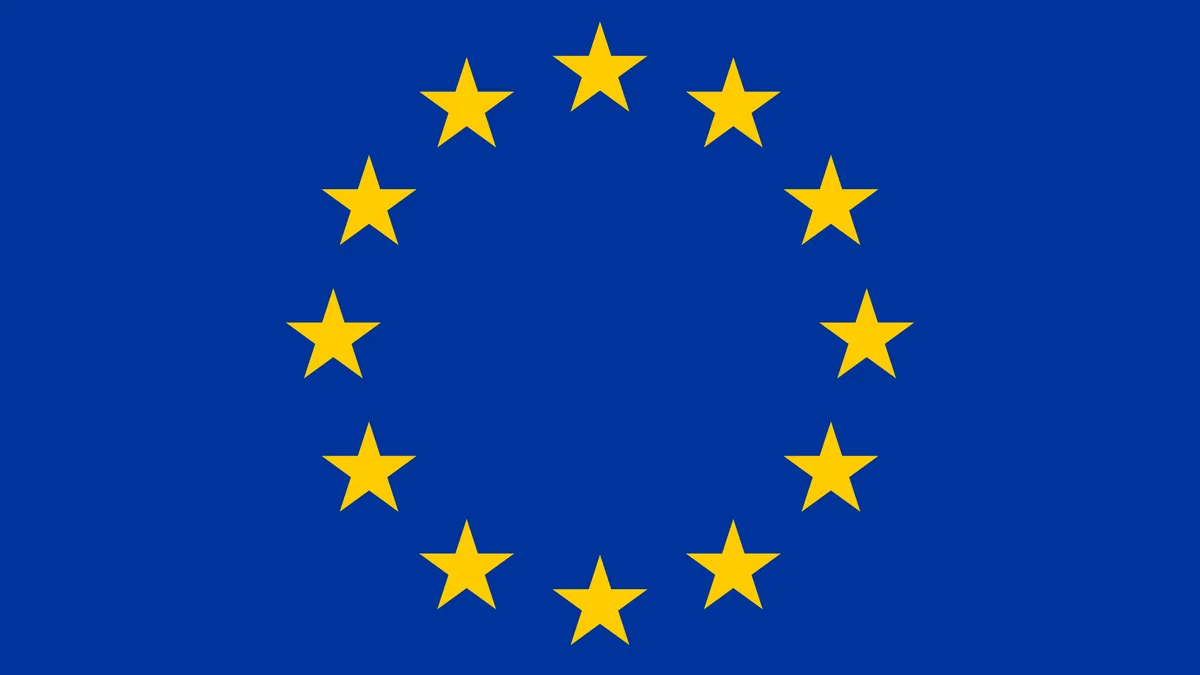
European Union
| Headquarters city | Brussels (main) |
|---|---|
| Original purpose | Economic and political cooperation after World War II |
| First created | 1950s (as European Coal and Steel Community) |
| Member states | 27 (as of 2024) |
| Official languages | 24 |
| Main institutions | European Commission, European Parliament, Council of the European Union, European Council, Court of Justice of the EU |
| Decision-making | Supranational and intergovernmental |
| Legal tender | Euro (used in 20 member states) |
Origin and history
The European Union originates from the continent of Europe, specifically from its western nations in the aftermath of the Second World War. Its foundational process began in the early 1950s with the creation of the European Coal and Steel Community. This first community was established by six founding nations: Belgium, France, West Germany, Italy, Luxembourg, and the Netherlands. The explicit aim was to integrate heavy industries so closely that future war between these historic rivals would become materially impossible. Throughout the subsequent decades, this economic cooperation deepened and widened, evolving through various treaties and name changes. The Maastricht Treaty, signed in the early 1990s, formally established the European Union and laid the groundwork for a single currency. The EU then underwent a significant eastward expansion in the early 2000s, incorporating many countries from Central and Eastern Europe that had been under Soviet influence.
What it is for
The European Union is a supranational political and economic union of member states that have pooled sovereignty in specific areas. Its primary purpose is to ensure peace, stability, and prosperity across the European continent through deep economic and political integration. A core function is maintaining and governing the single internal market, which guarantees the free movement of goods, services, capital, and people. It establishes common policies in areas such as agriculture, fisheries, and regional development to reduce economic disparities between its regions. The EU also sets common rules on consumer protection, environmental standards, and digital privacy for all member states. Furthermore, it acts as a unified bloc in international trade negotiations and seeks to coordinate foreign and security policy among its members.
Pros and cons
A significant advantage of the European Union is the unprecedented period of peace and stability it has fostered among its historically conflict-prone member states. The single market provides immense economic benefits for businesses through scale and reduced barriers, while citizens enjoy freedom to live, work, and study anywhere within the union. Common regulations on food safety, environmental protection, and digital rights often set high global standards. A major con is a perceived democratic deficit, where complex decision-making in Brussels can feel distant and unaccountable to ordinary citizens, fueling euroscepticism. The common currency, the euro, has created tensions as it limits national control over monetary policy, sometimes exacerbating economic crises in weaker economies without a unified fiscal policy to fully back it. The principle of free movement, while a core benefit, has also led to political friction over migration and concerns about social services, and the requirement for unanimous decisions on critical issues like foreign policy can lead to paralysis.
Who it suits
The European Union model suits nations that are willing to cede a degree of national sovereignty in exchange for greater collective economic and political influence on the world stage. It is particularly suited for smaller and medium-sized European countries that benefit enormously from access to a vast common market and the political weight of the bloc. Member states with strong, diversified export-oriented economies tend to integrate more smoothly into the single market and currency union. The structure suits populations that are comfortable with complex, multi-level governance and value transnational mobility and high regulatory standards. It is less suited for nations with a strong tradition of unilateralism or deep-seated political cultures that are highly resistant to the compromises required by pooled sovereignty. The EU framework also presents greater challenges for economies that are less competitive or structurally different, as they can struggle within a one-size-fits-all monetary policy or face intense competition within the single market.
Latest European Union news
Latest reporting

US Envoys Secure Putin's Conditional OK for Europe in Ukraine Talks
U.S. envoys met with Vladimir Putin and Volodymyr Zelenskyy to restart Ukraine peace talks, with Putin granting conditional approval for European...
Canada and EU Launch Alliance for the Future with Associate Membership Bid
Canada and the European Union announced a landmark strategic partnership, the Alliance for the Future, at a summit in Montreal.
EU Withdraws Canada Associate Membership Offer
The European Union has reversed its offer to Canada to begin associate membership talks due to disagreements among member states, opting instead for...

Latin American Cartels Expand Across Europe as Cocaine Seizures Soar
A major investigation reveals Latin American criminal groups are now active in at least 12 European countries, with cocaine seizures surging 471%...

EU Urges US to Lift Palestinian Delegation Travel Ban for UN
The European Union has called on the United States to reverse its denial of visas for Palestinian officials seeking to attend the UN General Assembly.

EU offers Canada associate member status
European Commission President Ursula von der Leyen has proposed an 'associate member' status for Canada during her State of the Union address.