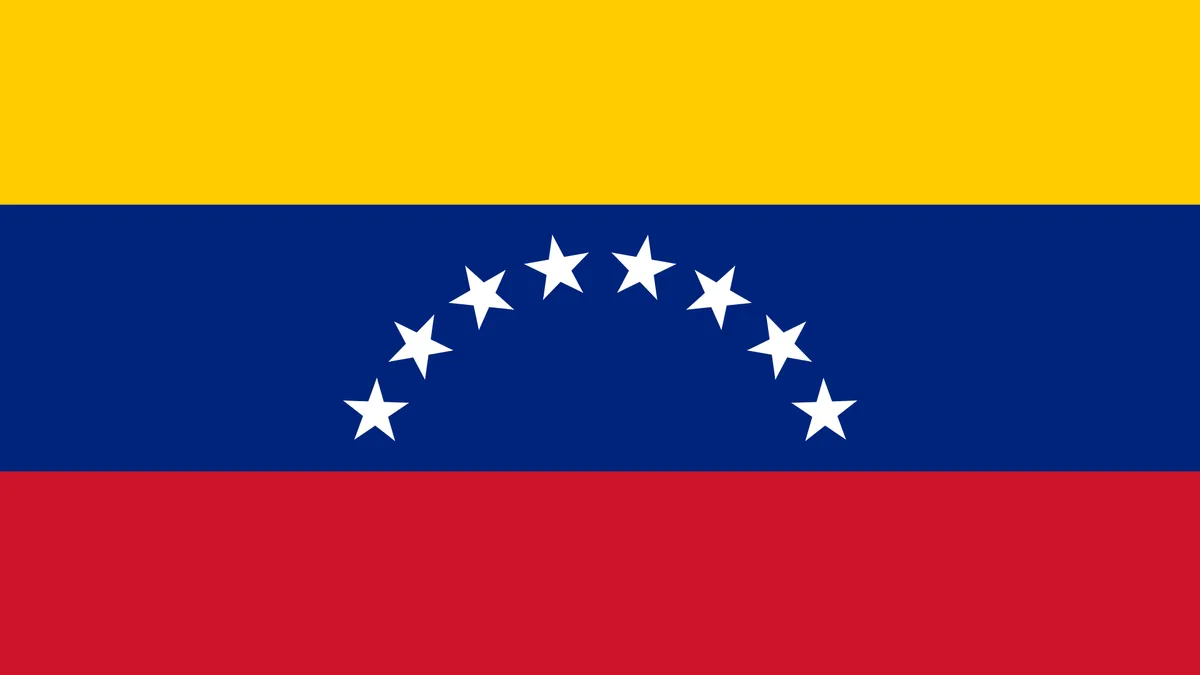
Venezuela
| Official name | Bolivarian Republic of Venezuela |
|---|---|
| Capital | Caracas |
| Official language | Spanish |
| Government type | Federal presidential republic |
| Currency | Bolívar soberano |
| Geographical region | Northern South America |
| Major exports | Petroleum and petroleum products |
| Time zone | Venezuela Standard Time (VET) |
Origin and history
Venezuela originates as a sovereign nation-state in northern South America, its territorial foundation rooted in the Spanish colonial administrative entity known as the Captaincy General of Venezuela. The modern republic was formally created in the early 19th century following a prolonged war of independence against the Spanish Empire, a process culminating in the early 1830s after the dissolution of Gran Colombia. Its political history since then has been characterized by alternating periods of authoritarian rule and democratic governance, with significant economic transformation beginning in the early 20th century with the discovery and exploitation of massive petroleum reserves. The country's 20th-century narrative is deeply marked by the consolidation of a petro-state model, which fundamentally shaped its institutions, economy, and international relations. The late 20th and early 21st centuries saw the rise of the political project known as the Bolivarian Revolution, which initiated a profound and polarizing restructuring of the state and society. This historical trajectory has established Venezuela's contemporary identity as a nation of immense natural resource wealth juxtaposed with profound socio-political complexity and conflict.
What it is for
Venezuela functions as a national territory and political entity whose primary constitutional purpose is to guarantee the rights and duties of its population within a defined geographical space. It serves as the framework for the organization of a society with a distinct cultural identity, blending Indigenous, African, and Spanish influences into a unique national character expressed through music, art, and traditions. Economically, its role for much of the modern era has been that of a major global hydrocarbon exporter, using oil revenues to fund state-led development and social programs. The state apparatus is designed to administer vast public resources, manage a complex multi-party political system, and maintain national sovereignty over a diverse geography that includes Andean mountains, extensive plains, a Caribbean coastline, and a portion of the Amazon rainforest. In the regional context, it has historically acted as a hub for integration initiatives and, more recently, as a focal point for geopolitical debates concerning sovereignty, economic models, and foreign intervention. Furthermore, it exists as a homeland for a diaspora that now numbers in the millions, maintaining cultural and familial ties that span the continent and the world.
Overview
Venezuela is a federal presidential republic located on the northern coast of South America, bordered by Colombia, Brazil, Guyana, and the Caribbean Sea. Its territory encompasses approximately 916,445 square kilometers, featuring highly diverse geographical regions including the Maracaibo lowlands, the northern Andes, the vast Llanos plains, the Guiana Highlands, and the Orinoco River Delta. The population is predominantly mestizo, with significant European, African, and Indigenous components, and Spanish is the official language. Caracas serves as the capital and primary urban, political, and economic center, though other major cities like Maracaibo, Valencia, and Ciudad Guayana are crucial industrial and commercial hubs. The nation's economy remains overwhelmingly dependent on the extraction and export of petroleum and natural gas, despite possessing other substantial mineral resources like iron, bauxite, and gold. Its contemporary political landscape is defined by a deeply polarized conflict between the government bloc, which controls most state institutions, and a fragmented opposition, operating within a context of severe economic contraction and complex international relations.
What to know
Understanding Venezuela requires recognizing that its current crisis is multidimensional, encompassing political, economic, social, and humanitarian facets that are deeply interlinked. It is critical to know that the country possesses the largest proven oil reserves in the world, a fact central to its historical development and its present-day challenges. The political system operates under a constitution approved in 1999, which established a unicameral National Assembly and expanded presidential powers, though its practical application is a central point of contention between government and opposition. Hyperinflation and a severe contraction of Gross Domestic Product have led to a drastic decline in real wages and purchasing power for the majority of citizens over the last decade. A significant portion of the population now depends on government-administered social programs and food distribution boxes for basic subsistence, while parallel dollarization of parts of the economy has created a complex dual-currency reality. Internationally, the country faces extensive sanctions from the United States, the European Union, and other nations, which significantly restrict its financial and oil trade operations, while maintaining alliances with countries like Russia, China, Cuba, and Iran.
Common questions
People often ask how a country with such immense natural resource wealth can experience such profound economic hardship and scarcity of basic goods. A frequent inquiry concerns the actual mechanisms of governance and whether fair electoral competition is currently possible, given international observations and reports of institutional control. Many wonder about the safety and logistical conditions for travel within the country, including the stability of basic services like electricity, water, and domestic transportation. There is consistent curiosity about the scale and impact of emigration, specifically which countries host the largest Venezuelan diaspora communities and the conditions they face. Questions regularly arise regarding the status of the opposition leadership, the unity of anti-government forces, and their strategies for political change. Finally, a common and complex question involves the legality and international recognition of parallel government bodies, such as interim presidencies, and their practical authority within and outside the country's borders.
Pros and cons
A significant advantage historically has been the nation's vast resource endowment, which provided the fiscal capacity for ambitious state projects, infrastructure development, and periods of high social spending. The cultural and natural diversity is a profound asset, offering everything from Andean peaks and Caribbean beaches to unique ecosystems like the tepuis and the Orinoco basin, with substantial potential for tourism and scientific research. The resilience and entrepreneurial spirit of its people, both those who remain and those in the diaspora, represent a formidable human capital base for any future recovery. The primary and overwhelming disadvantage is the extreme dependence on a single volatile commodity, which made the economy and social fabric vulnerable to price swings and fostered rent-seeking state institutions. A common and critical mistake, made by both domestic political actors and international observers, has been to repeatedly underestimate the depth of institutional erosion and the complexity of reversing a systemic collapse, often seeking simplistic or immediate solutions. Many who initially supported transformative political projects later came to regret their choice as institutional checks eroded, economic management faltered, and personal freedoms contracted, leading to a widespread sense of disillusionment across the political spectrum.
Who it suits
The current environment in Venezuela primarily suits individuals with a high tolerance for uncertainty, instability, and adaptive survival strategies, often those with deep familial networks or access to foreign currency. It can accommodate those whose professional skills are in high demand within the segmented economy, such as experts in informal trade, digital freelancing serving external markets, or specialized technicians in the residual formal sector. The political and administrative framework is tailored for those aligned with the governing political project, who can navigate its internal structures and benefit from its systems of distribution and authority. Conversely, it is profoundly unsuited for individuals requiring stable institutional frameworks, predictable career paths, consistent public services, or routine access to comprehensive healthcare and education. Entrepreneurs seeking a conventional, rules-based business environment with legal certainty and access to formal credit find it exceptionally challenging. Ultimately, the nation in its present state is a difficult fit for the vast majority of its own citizens, which is precisely why so many have chosen to leave, seeking contexts that better suit basic aspirations for security, prosperity, and personal fulfillment.
Latest Venezuela news
Latest reporting

Alina Habba's Marriage Links Trump Loyalist to Venezuela Business Dealings
Alina Habba, a longtime Trump loyalist and former personal lawyer, married Turkish investor Turhan Mildon last month, connecting a key Trump ally to...

Fugitive businessman captured in Venezuela bribery case
A Colombian businessman wanted by the U.S. for allegedly bribing Venezuelan officials has been taken into custody.
Venezuela prisoner releases stall amid US engagement
Dozens of political prisoners were freed in Venezuela, but the amnesty process has stalled as interim President Delcy Rodriguez engages with the US.
Venezuela's acting president Delcy Rodriguez pledges elections at UN
Acting President Delcy Rodríguez used her first UN address to pledge elections in Venezuela, determined by the people, and highlighted renewed U.S.

Delcy Rodríguez's Rise from Student to Venezuela's Interim President
Delcy Rodríguez, now Venezuela's interim president, rose from a socialist student in London to power after the U.S.
US Seizes Control of Venezuelan Oil After Maduro Capture
The United States has taken majority control of a fifth of Venezuela's oil reserves following the capture of President Nicolás Maduro.