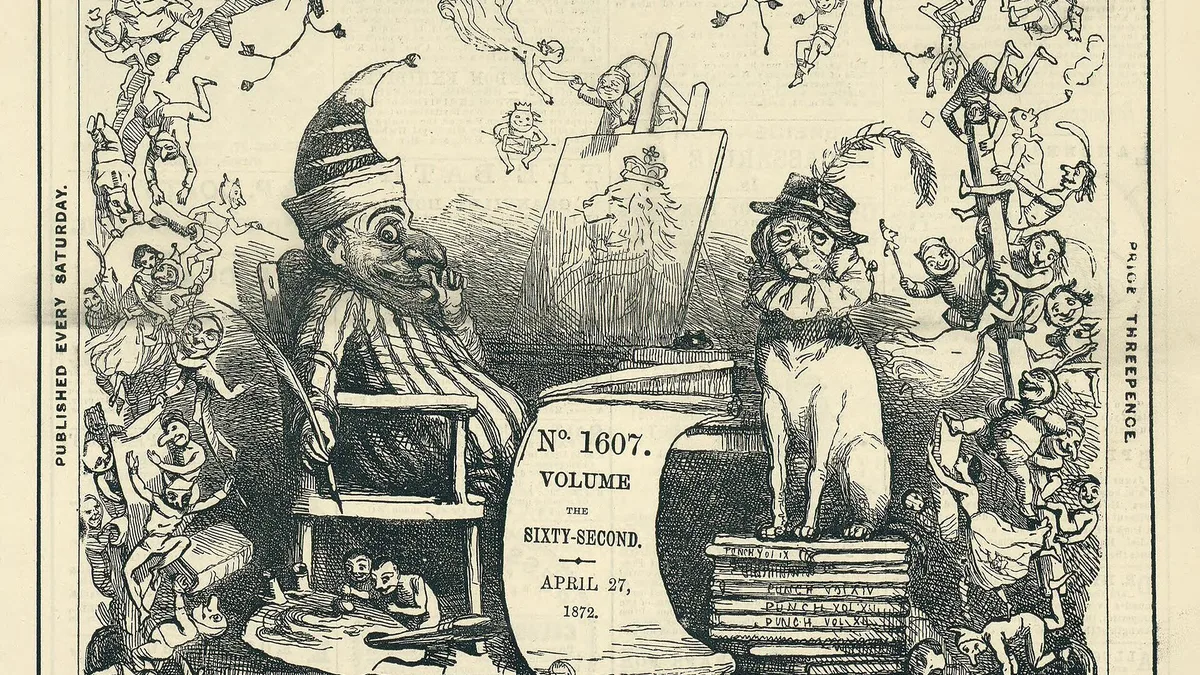
How To Tell A Satire Account From A News Account
| Account name | often contains a pun, joke, or obvious absurdity |
|---|---|
| Profile description | may state "parody" or "satire" explicitly |
| Source of posts | does not cite original reporting or named journalists |
| Tone of content | employs exaggeration, irony, or absurdity for effect |
| Fact-checking status | not listed as a verified news source by independent fact-checking organizations |
| Domain of website | often uses a non-standard or humorous URL for linked content |
Origin and history
The practice of distinguishing satire from news is a critical skill that developed alongside mass media, but its formalization as a widely-shared public guideline is a more recent phenomenon. In the late 20th and early 21st centuries, particularly in North America and Europe, the rise of satirical news programs and publications created a need for public media literacy. The specific phrase "How To Tell A Satire Account From A News Account" gained prominence as a direct response to the digital media landscape of the 2010s. This was a period marked by the viral spread of content on social media platforms, where the context and source of information were often stripped away. The guidelines were not invented by a single entity but crystallized from the repeated advice of journalists, educators, and fact-checking organizations globally. Their widespread dissemination is a direct consequence of the confusion and misinformation that can arise when satirical content is mistaken for factual reporting.
What it is for
This framework is designed to equip readers and viewers with a practical toolkit for evaluating the intent behind a piece of content before accepting its claims as fact. Its primary purpose is to prevent the accidental spread of misinformation that occurs when humorous or exaggerated satire is shared in earnest. It serves as a fundamental component of digital and media literacy, especially crucial in regions with highly polarized political environments. For the Latin American reader, it is a vital skill for navigating a media ecosystem that includes both traditional news outlets and a vibrant, often biting, satirical culture online and on television. The guidelines help audiences appreciate satire for its artistic and critical value, while avoiding the pitfall of using its outlandish claims to support real-world arguments. Ultimately, it is for fostering a more informed and discerning public, capable of engaging with both news and commentary responsibly.
Overview
The core principle is that satire uses humor, irony, exaggeration, or ridicule to critique real events, people, or institutions, while news aims to report factual information objectively. A complete evaluation requires checking multiple signals, not relying on a single factor. Key areas of examination include the source's stated identity, its established history and reputation, the tone and style of writing, the plausibility of the claims, and the presence of clear disclaimers. In the Latin American context, this means being familiar with both renowned satirical platforms and established journalistic institutions within the region. The process is not about cynically dismissing all information but about applying consistent, critical thinking to assess a source's purpose. This overview provides the foundation for the more detailed analysis outlined in the following sections, moving from general concept to specific, actionable checks.
What to know
First, always identify the exact source of the publication, looking for an "About" page that may explicitly state it is a satire or parody site. Second, examine the URL and social media handles for obvious humorous or absurdist names that signal a non-serious intent. Third, analyze the headline and content for extreme hyperbole, absurd scenarios, or a consistent tone of mockery that departs from standard journalistic neutrality. Fourth, check if the story is being reported by multiple established, mainstream news organizations; if it appears only on fringe or satirical sites, it is a major red flag. Fifth, look for visual cues such as manipulated images or cartoons that are clearly not documentary photography. Sixth, understand that even reputable satirical outlets can have their content stripped of context when shared on social media, so the original source must always be verified.
Common questions
A common question is whether satire is inherently dishonest or unethical, but it is a legitimate form of social commentary protected in many democratic societies. People often ask how to handle satire that closely mimics real news formatting, which requires checking for the subtle cues of exaggeration and the source's known reputation. Many wonder if sharing satire as a joke contributes to misinformation, and the answer is that without clear signaling of intent, it often does mislead others in the network. Readers frequently question if traditional media literacy is enough, and while foundational, the digital age requires specific skills to evaluate online-native sources and viral content. A particular concern in Latin America is whether political satire should be treated differently, and while its content can be sharp, the same principles for identifying its satirical nature apply. Finally, users ask who is responsible for this education, and the responsibility is shared among platforms, media outlets, educational institutions, and ultimately, the individual consumer.
Pros and cons
A major pro is that these guidelines empower individuals to take control of their information intake, reducing reliance on third-party claims about a source's credibility. They provide a clear, repeatable method that works across different platforms and media types, from Twitter to television. A significant con is that the process requires time, effort, and a baseline knowledge of the media landscape, which can be a barrier for casual news consumers. The system can fail when satire is exceptionally clever or when a news report is unusually poorly written, leading to confusion even for the diligent. A common mistake is performing only one check, such as glancing at a convincing-looking logo, and then stopping the investigation, which often leads to misidentification. People often regret using these skills only selectively, applying them to sources they already distrust while giving a pass to those that align with their pre-existing views, which undermines the entire exercise.
Who it suits
This practice suits any media consumer, but it is particularly essential for students, educators, journalists, and anyone who actively participates in online discussions or shares content on social media. It is well-suited for individuals living in politically charged environments where misinformation can have immediate real-world consequences, making it highly relevant for the engaged Latin American citizen. It also suits those who enjoy political and cultural satire, as it enhances appreciation by clarifying the genre's boundaries and intentions. Conversely, it is less suited for those unwilling to pause and reflect before sharing content, or for individuals who prefer to receive pre-vetted information from a single, trusted authority figure. It requires a mindset comfortable with ambiguity and critical thinking, rather than one that seeks simple, binary answers about every piece of content encountered. Ultimately, it is a necessary tool for anyone aiming to be a responsible participant in the modern public sphere.
Latest How To Tell A Satire Account From A News Account news
Latest reporting

BRICS Summit in New Delhi Gathers Amid Mideast Tensions
The 18th BRICS summit in New Delhi brings together leaders from emerging economies, including Iran and Gulf states currently at war.

Delcy Rodríguez's Rise from Student to Venezuela's Interim President
Delcy Rodríguez, now Venezuela's interim president, rose from a socialist student in London to power after the U.S.
UN warns Israel's Gaza rubble clearance risks destroying evidence
A UN expert says Israel's removal of millions of tonnes of Gaza rubble, including from cemeteries, risks destroying evidence of war crimes.

Israel deports British activist who protected Palestinian children
British student Finn Joughin, 22, was deported from Israel after intervening to protect Palestinian children in Umm al-Khair, West Bank.

Milei escalates Falklands dispute with new sanctions
Argentine President Javier Milei announced new sanctions to halt a British-led oil project near the Falkland Islands, seizing on comments from U.S.

Trump threatens more strikes as Iran death toll hits 18
U.S. President Donald Trump has threatened further military action against Iran, claiming the U.S. can strike 'anytime we want.' The death toll from...