How Each Electoral System Works
| Region name | How Each Electoral System Works |
|---|---|
| Original use | To explain the mechanics of different voting systems for a general audience. |
| Subject type | Informational reference guide. |
| Content style | Comparative, procedural, and descriptive. |
| Typical structure | System-by-system breakdown with definitions and examples. |
| Key information | Voting method, seat allocation formula, typical outcomes, and real-world examples. |
Origin and history
The systematic academic comparison of electoral systems originates from Western political science, primarily in Europe and North America, during the late 19th and early 20th centuries. This field developed alongside the expansion of suffrage and the experimentation with different democratic models following major political transformations. Early influential thinkers included figures like John Stuart Mill in Britain, who advocated for proportional representation, and French mathematicians analyzing vote counting. The study became more formalized after the Second World War, as new democracies sought to design stable institutions. In recent decades, the field has become globally relevant, with international organizations analyzing system impacts on governance and conflict. For Latin America, this body of knowledge became particularly pertinent during democratic transitions and constitutional reforms in the late 20th century.
What it is for
The study of how each electoral system works serves to explain the rules that convert votes into political power within a representative democracy. Its primary purpose is to provide a framework for understanding the consequences of different institutional designs on a political system. It allows analysts to predict how a system will influence party fragmentation, geographic representation, and the relationship between citizens and elected officials. This knowledge is crucial for constitutional assemblies, reform commissions, and legislators considering changes to electoral laws. It also helps voters, journalists, and activists comprehend strategic voting, coalition formation, and the representativeness of outcomes. Ultimately, it is a tool for evaluating whether an electoral system promotes stability, inclusivity, and accountability in a specific national context.
Overview
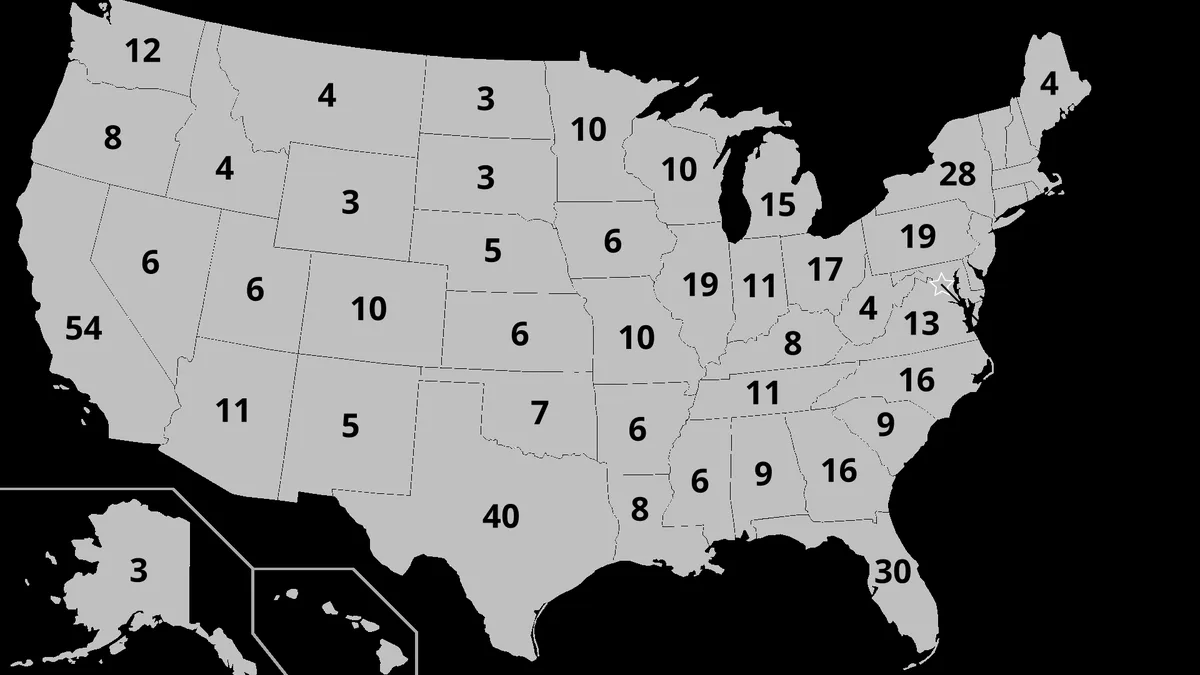
Electoral systems are generally categorized into three broad families: plurality/majoritarian systems, proportional representation (PR) systems, and mixed systems. Plurality systems, like First-Past-the-Post used in the United Kingdom and the United States, award seats to the candidate with the most votes in each district, often leading to two dominant parties. Proportional representation systems, common in much of Europe and Latin America, aim to allocate seats to parties in proportion to their share of the national or regional vote, typically encouraging multi-party legislatures. Mixed systems, such as Mexico's, combine elements of both by having voters cast separate ballots for a district representative and for a party list. The specific mechanics within each family, including district magnitude, electoral thresholds, and ballot structure, create significant variations in outcomes. Understanding these categories is the first step in analyzing any country's political dynamics.
What to know
A critical concept is the "mechanical effect" of an electoral system, which is how the mathematical formula for translating votes into seats can favor large parties and disadvantage small ones. Equally important is the "psychological effect," where voters and parties adjust their behavior based on expectations of the mechanical effect, such as strategic voting against a disliked front-runner. The size of electoral districts is paramount; single-member districts tend to produce less proportional results than large, multi-member districts. The existence and height of an electoral threshold, like Brazil's absence of one or Germany's 5%, directly determines which parties enter parliament. The ballot structure matters greatly, distinguishing between open-list PR (where voters choose candidates) and closed-list PR (where parties determine candidate order). Finally, no system is neutral; each embodies a specific trade-off between principles like governability and representativeness.
Common questions
Why do some countries with many parties have stable governments while others experience constant coalition crises? This often relates to whether the electoral system encourages pre-electoral coalitions or forces fragmented post-election bargaining. How can a party win the popular vote but lose the election, as sometimes happens in presidential or legislative races? This is a feature of plurality systems and systems with regional seat allocation that do not aggregate the national vote total. What is the impact of gender quotas or indigenous representation laws? Their effectiveness is heavily dependent on the electoral system, working better in closed-list PR with placement mandates than in single-member districts. Do run-off elections for president, common in Latin America, produce more legitimate winners? They can ensure majority support but may also polarize a second round between two extremes. Why do some legislators seem loyal only to their local district while others follow the party line? This is frequently a direct result of whether the system uses candidate-centered or party-centered ballots.
Pros and cons
A major pro of plurality/majoritarian systems is the tendency to produce clear winners and single-party governments, which can simplify accountability and decision-making. A significant con is the high misrepresentation of minority views, where parties with substantial national support may win very few seats, leading to voter alienation and regional polarization. Proportional representation systems excel at reflecting the diversity of political opinion in the legislature, enhancing inclusion and legitimacy for various groups. A common drawback is the potential for fragmented legislatures, unstable coalition governments, and disproportionate power for small kingmaker parties, which can blur accountability. Mixed systems attempt to balance these trade-offs but can create two classes of legislators and often fail to eliminate the disproportionality of the majoritarian component. A frequent mistake in system design is importing a model without considering a country's specific party system and societal cleavages, which can exacerbate conflicts it was meant to resolve.
Who it suits
Plurality systems often suit historically stable, two-party cultures with relatively homogeneous populations and a strong tradition of single-party governance, though they can entrench existing party dominance. Proportional representation suits socially diverse, multi-ethnic, or multi-cleavage societies where ensuring all significant groups have a legislative voice is a priority for national cohesion. Countries with a history of deep political conflict may use high-threshold PR to encourage broad, moderate coalition parties and marginalize extremists. Mixed systems often appeal to countries in transition, seeking to combine the local accountability of district representatives with the fair party representation of lists, but they require a complex administrative apparatus. No system is universally ideal; the suitability depends entirely on a nation's specific historical context, geographic settlement patterns, and most pressing political goals, whether stability, inclusion, or accountability.
Latest How Each Electoral System Works news
Latest reporting

Europe's far-right gains boost Kremlin's influence
Recent electoral successes by Germany's AfD and the potential rise of France's Marine Le Pen are creating political openings for Russia within the...

Sunken Ship Sparks Fight Over Israel's Right and Militia's Violent Legacy
The discovery of the Irgun's sunken cargo vessel, the Altalena, has ignited a political dispute between Prime Minister Benjamin Netanyahu and...