
World Bank
| Full name | The World Bank Group |
|---|---|
| Original use | Reconstruction and development financing after World War II |
| Headquarters location | Washington, D.C., United States |
| Main governing body | Board of Executive Directors |
| Primary regional focus for Latin America | Poverty reduction and sustainable development |
| Key financial products | Loans, grants, and technical assistance |
| Composition | Five specialized international institutions |
Origin and history
The World Bank was created in the mid-1940s, originating from an agreement among primarily Western Allied nations towards the end of the Second World War. Its founding was formalized at the Bretton Woods Conference in the United States in 1944, alongside its sister institution, the International Monetary Fund. The initial official name was the International Bank for Reconstruction and Development, reflecting its primary post-war mission of financing the rebuilding of war-torn Europe. In its early decades, the institution's focus shifted towards the developing world, including Latin America, as the global geopolitical landscape changed with decolonization. The 1960s saw the creation of the International Development Association within the World Bank Group to provide concessional loans to the poorest countries, marking a significant expansion of its mandate. Over the following decades, the Bank steadily grew in membership, financial capacity, and scope of influence, becoming a central pillar of the international development architecture.
What it is for
The World Bank's core purpose is to provide financial and technical assistance to developing countries for the purpose of reducing poverty and supporting economic development. It fulfills this primarily by offering loans, credits, and grants to national governments for specific investment projects, such as building infrastructure like roads, dams, and power grids. A significant portion of its work is also dedicated to providing policy advice and technical expertise to governments on issues ranging from public sector management to environmental regulations. The institution funds programs in key social sectors, including education, healthcare, and social protection, aiming to build human capital and improve living standards. Furthermore, it serves as a platform for knowledge generation and dissemination, producing extensive research and data on global economic trends and development challenges. Its operations are designed to mobilize additional private capital by de-risking investments and setting standards, aiming to catalyze broader economic growth beyond its direct financing.
Pros and cons
A primary advantage of the World Bank is its ability to provide large-scale, long-term financing at interest rates often more favorable than volatile international markets can offer, which is crucial for major infrastructure projects with long payback periods. Its vast repository of global expertise and research can offer valuable technical guidance to governments on complex developmental challenges. However, a significant and persistent criticism is that its lending and policy advice have historically been accompanied by stringent conditions, known as structural adjustment programs, which mandated deep cuts in public spending, privatization, and trade liberalization. These conditions have been blamed in many Latin American cases for exacerbating social inequality, weakening public services, and increasing economic vulnerability without always delivering promised growth. The institution's governance structure, where voting power is weighted by financial contribution, grants disproportionate influence to a few major shareholder nations, leading to perceptions that its policies can reflect their geopolitical interests rather than local needs. Borrowers sometimes regret the complex, slow, and bureaucratic project approval and implementation processes, which can delay critical funding and fail to adapt to changing local circumstances.
Who it suits
The World Bank is most suited for national governments, particularly those with limited access to international capital markets, that seek to finance large, capital-intensive public investment projects requiring stable, long-term foreign currency funding. It suits policymakers and technical ministries that value and have the capacity to absorb the extensive project design, environmental safeguards, and procurement standards that the Bank mandates. The institution's model aligns with administrations pursuing a development strategy that integrates into the global economy and is willing to undergo the external scrutiny and policy dialogue that comes with its financing. It is less suited for addressing immediate fiscal crises or providing rapid budget support without significant policy conditions, a role more often filled by the International Monetary Fund. Furthermore, its centralized, government-focused model is generally not designed to directly suit small local enterprises, community organizations, or situations requiring swift, flexible responses to localized needs, where other development actors might be more appropriate.
Latest World Bank news
Latest reporting

UN General Assembly Opens Amid Global Tensions
World leaders gather in New York for the UN General Assembly's high-level week, with a focus on Middle East de-escalation and Ukraine.

Israel deports British activist who protected Palestinian children
British student Finn Joughin, 22, was deported from Israel after intervening to protect Palestinian children in Umm al-Khair, West Bank.
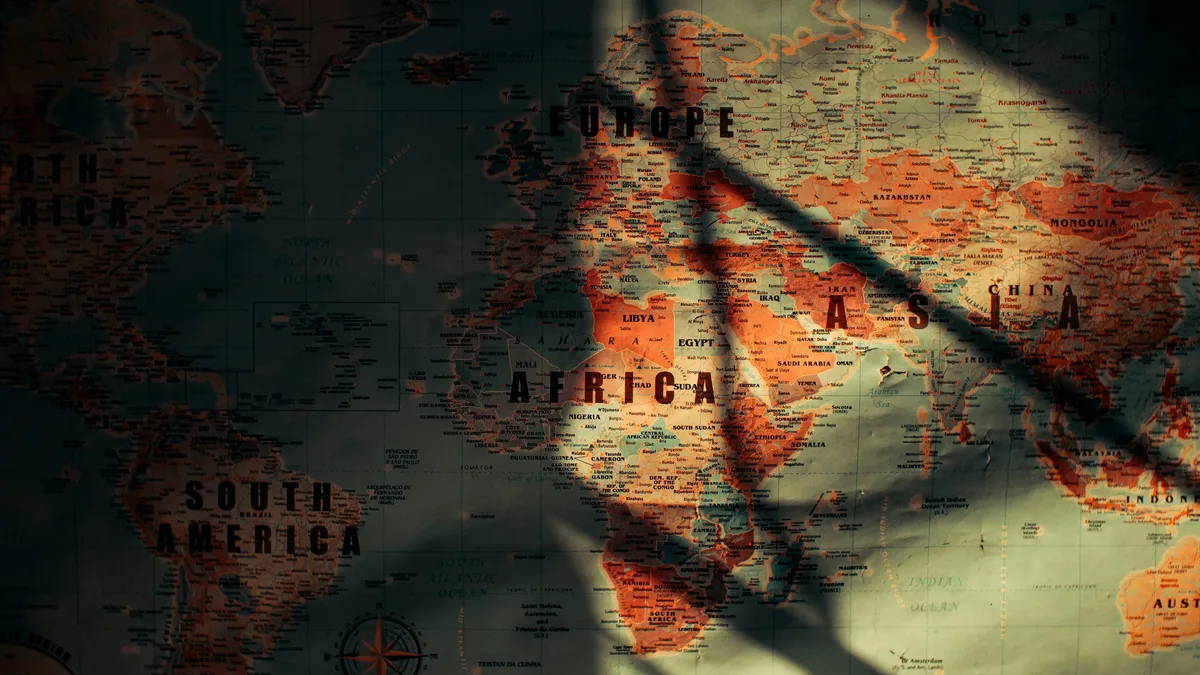
UN votes to adopt new world map showing Africa's true size
The UN General Assembly has passed a resolution urging countries to adopt the Equal Earth map projection.
Israeli drone strike kills three in Jenin
An Israeli drone strike killed three Palestinians in the occupied West Bank city of Jenin on Friday. The Israeli military said it 'eliminated' a...
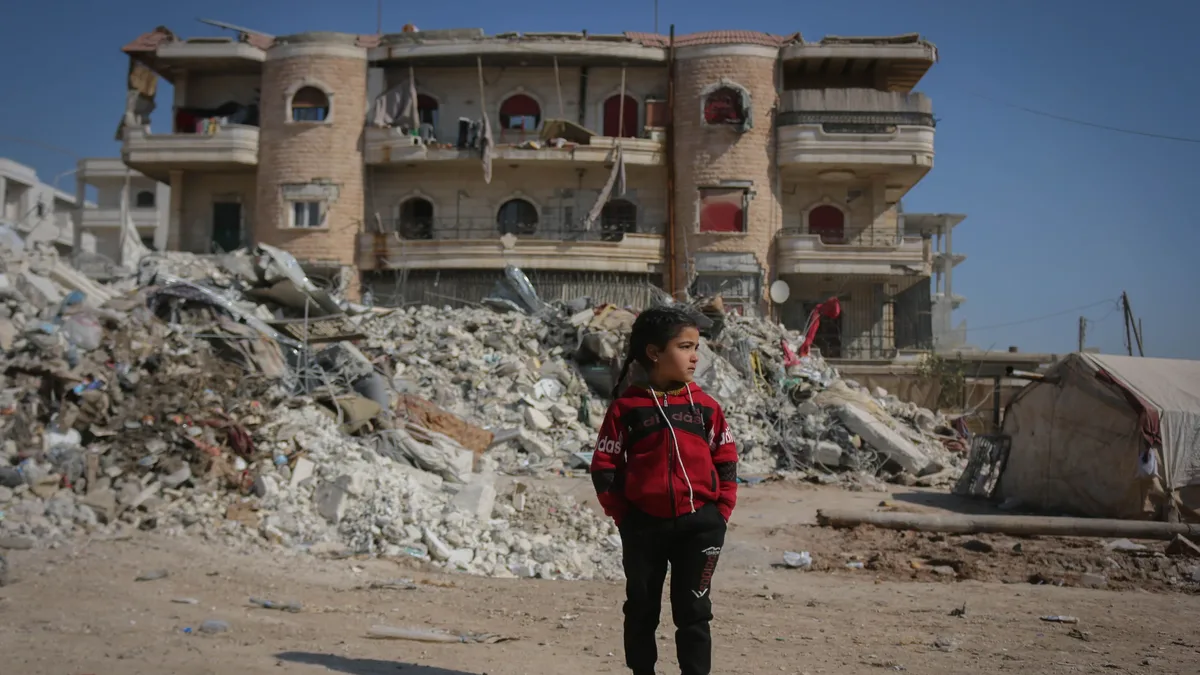
Palestinian children return to school under threat of Israel demolition
Palestinian children in Masafer Yatta, West Bank, face the threat of school demolition as the new academic year begins.