Why A Wire Report Is Not The Same As Our Reporting
Origin and history
The phrase "Why A Wire Report Is Not The Same As Our Reporting" originates from the journalistic practice of major global news agencies, particularly those based in North America and Europe, in the late 20th and early 21st centuries. It reflects a long-standing distinction made by many newspapers, broadcasters, and digital platforms between raw agency copy and their own published content. This editorial practice became more explicitly communicated to audiences with the rise of digital media, where publication speed and source transparency became critical. The specific formulation as a headline or explanatory note is a feature of modern online journalism that seeks to build reader trust. Its conceptual roots lie in the traditional separation between international wire services, like Reuters or The Associated Press, and the local reporting staff of a subscribing newsroom. The phrase itself gained prominence as a tool for outlets to differentiate their unique value in an information-saturated environment.
What it is for
This editorial note serves to clearly delineate between aggregated news content and original reporting produced by a publication's own staff. Its primary function is to manage reader expectations regarding the sourcing, depth, and perspective of a news item. It acts as a transparency mechanism, informing the audience that the accompanying article is based on material from a wholesale news provider, not first-hand investigation. For the publishing outlet, it is a necessary disclaimer that maintains journalistic integrity while utilizing essential wire services to cover global events. It also functions internally to uphold editorial standards, reminding both writers and editors of the provenance of the information they are handling. Ultimately, it is for establishing a clear chain of custody for facts in an era where reprocessed information is ubiquitous.
Overview
A wire report is a standardized news dispatch written by journalists employed by a global news agency and distributed to subscribing client organizations worldwide. In contrast, "our reporting" refers to journalism conducted directly by the staff of the publishing outlet, involving original interviews, local sourcing, and independent verification. The explanatory note "Why A Wire Report Is Not The Same As Our Reporting" typically prefaces or follows an article that is substantially based on or replicates a wire service dispatch. This note often outlines the editorial process the wire copy underwent before publication, such as translation, shortening, or contextual framing. It may highlight the limitations of the wire copy, such as its necessarily generalized perspective for a global audience, and the value added by the local outlet. The overview clarifies that while wire services provide essential raw material, the final published product carries the editorial signature and potential biases of the republishing organization.
What to know
You should know that wire reports are foundational to global news flow, allowing even regional outlets to cover international events they cannot physically access. It is crucial to understand that a wire report is written to be neutral and factual for a broad subscriber base, which can sometimes result in a lack of specific local context or analysis. Readers should be aware that when an outlet publishes a wire report, it does not necessarily endorse every detail, and the outlet's editors have made choices about which parts to include or emphasize. Knowing this distinction helps you, the reader, better evaluate the level of original investigation behind any given story and understand the layers of mediation in your news diet. It is also important to recognize that financial constraints mean many outlets rely heavily on wire copy to maintain a wide coverage scope, which can homogenize news narratives across different publications. Finally, this practice underscores that all news is a product of institutional processes, and the note is an invitation to be a more conscious consumer of information.
Common questions
A common question is whether a wire report is less reliable than a publication's own reporting, to which the answer is that wire agencies have rigorous accuracy standards but lack the local nuance a dedicated regional reporter might provide. Readers often ask why outlets do not simply produce all their own content, not realizing the immense cost and logistical impossibility of stationing journalists in every global hotspot. Another frequent inquiry is about the editorial changes made to a wire report, which typically involve condensing for length, adjusting terminology for the local audience, and possibly adding a brief introductory or concluding paragraph. Many wonder if the publishing outlet fact-checks the wire copy again, a process that usually involves basic verification against other sources but not the full reinvestigation possible with original reporting. People also question the objectivity of wire services themselves, which, while striving for neutrality, operate from specific national and cultural headquarters that can influence story selection and framing. Lastly, audiences ask how to identify a wire-sourced story, which can often be deduced from bylines crediting the agency or the use of standardized disclaimer language like the phrase in question.
Pros and cons
A significant pro of relying on wire reports is the ability for a local outlet to provide immediate, professionally reported coverage of distant breaking news at a fraction of the cost of deploying its own correspondent. This system ensures a baseline of factual reporting from conflict zones or major global events where independent access is limited or dangerous. A clear con is the potential for narrative homogenization, where the same wire-sourced perspective and facts are reproduced across dozens of outlets, reducing the diversity of viewpoints available to the public. Another drawback is the occasional mismatch between the wire agency's primary audience and the local readership, leading to gaps in necessary context or cultural explanation that the republishing editors may not adequately fill. A common mistake made by outlets is failing to sufficiently adapt or contextualize the wire copy, resulting in a story that feels generic and disconnected from the community's specific concerns or prior knowledge. Readers often regret choosing to read only wire-sourced articles on complex local issues in their own region, where deeper, investigative "own reporting" would provide critical insights and accountability that a general dispatch cannot.
Who it suits
This practice of distinguishing wire reports suits news organizations with limited international budgets but a commitment to transparency, allowing them to offer a wide news menu while being honest about its origins. It suits a reader who values understanding the provenance of their information and prefers to know when they are reading a broadly-sourced dispatch versus a locally-grounded investigation. The explanatory note is particularly useful for audiences in regions like Latin America, where global wire narratives about the region can sometimes lack nuance, and the local outlet's framing becomes a crucial act of contextualization. It does not suit readers seeking deep, specialized analysis on a foreign event, as wire reports are designed for breadth and speed rather than depth on any single topic. This model suits the modern media economy, where consolidation and cost-cutting make shared content essential, but it requires an educated reader to interpret the differences. Ultimately, it best serves those who are media-literate and use the disclaimer as a cue to seek complementary reporting from other specialized or local sources.
Latest Why A Wire Report Is Not The Same As Our Reporting news
Latest reporting

Guardian Reporters Detail Challenges of Covering Trump's Trade Disputes
Guardian journalists describe the chaotic, fast-moving nature of reporting on Donald Trump's global trade disputes.
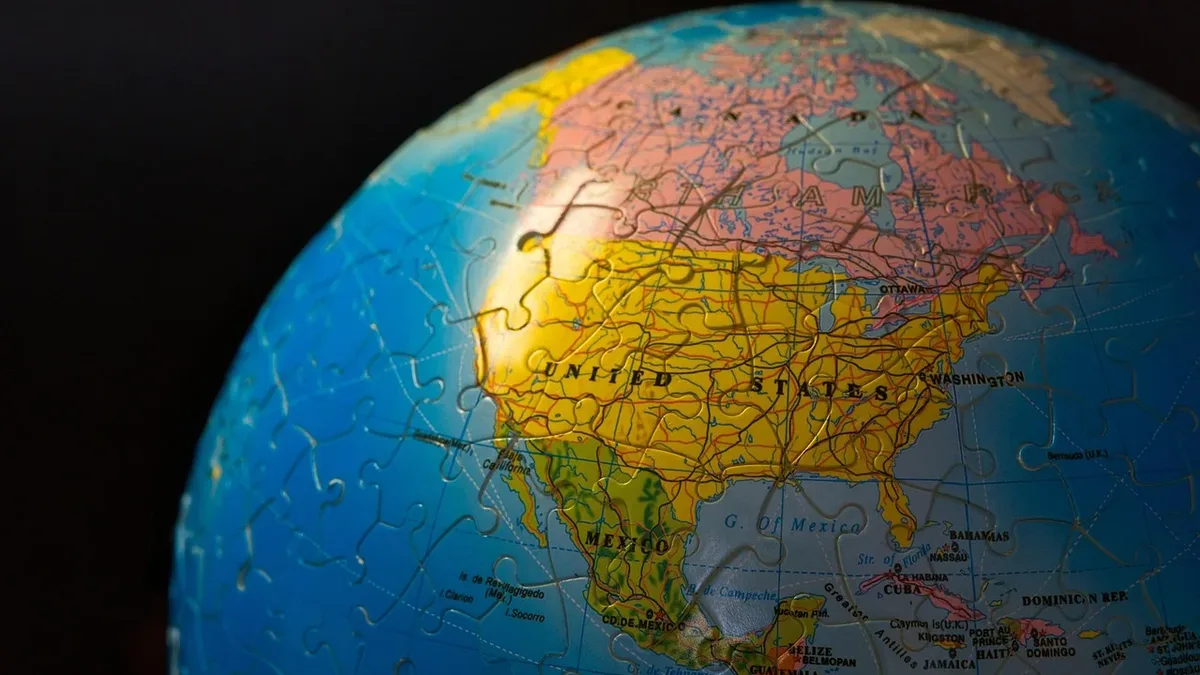
US-Canada Trade War Strains Cross-Border Towns
Residents of Fort Frances, Ontario, and International Falls, Minnesota, report rising tensions and economic strain due to the US-Canada trade war.

Argentina's affordable youth soccer model
A report from Argentina shows how clubs like Newell's Old Boys keep youth soccer accessible with low fees and scholarships, funded by professional...

Trump to report NBC's Welker to FCC
President Donald Trump says he will report NBC journalist Kristen Welker to the Federal Communications Commission for rebuke.