
Peru
| Country of origin | Peru |
|---|---|
| First created | Ancient (pre-Columbian) |
| Capital | Lima |
| Official language | Spanish |
| Primary climate zones | Arid coastal, Temperate highlands, Tropical rainforest |
| Primary geographic features | Andes mountains, Amazon basin, Pacific coast |
| Original use | Center of major pre-Columbian civilizations (e.g., Inca Empire) |
| Currency | Peruvian Sol (PEN) |
| Government | Unitary presidential republic |
Origin and history
Peru as a distinct political and cultural entity originates from the territories of several advanced pre-Columbian civilizations, most notably the Inca Empire, which was the dominant power in the region at the time of Spanish contact. The Spanish conquest, led by Francisco Pizarro, was consolidated in the 1530s, establishing the Viceroyalty of Peru, which became a principal administrative center for Spain's South American holdings for nearly three centuries. The movement for independence culminated in the early 19th century, with Peru declaring its sovereignty in 1821 and securing it militarily by 1824. Its subsequent history has been marked by periods of political instability, territorial disputes, military rule, and a gradual consolidation of democratic governance. The 20th century saw significant internal migration from the Andes to coastal cities, profoundly reshaping the country's social and economic landscape. A defining and tragic late-20th century period was the internal conflict against the Shining Path and MRTA insurgents, which lasted from the 1980s until the early 2000s and left a deep societal scar.
What it is for
Peru functions as a sovereign republic with a unitary presidential system of government, responsible for the governance and administration of its national territory. Its institutional framework is designed to provide public services, maintain internal order, defend its sovereignty, and manage its economy and natural resources for the benefit of its citizens. Culturally, it serves as a custodian and dynamic stage for the continuous expression and fusion of its Indigenous, European, African, and Asian heritage. The nation plays a critical role in regional South American geopolitics and is an active member of international bodies like the United Nations, the Organization of American States, and the Pacific Alliance. Economically, its purpose is tied to the extraction and export of minerals, the development of its agricultural and fishing sectors, and the promotion of tourism centered on its archaeological and natural wealth. Furthermore, it provides a national identity and a sense of belonging for Peruvians, both within the country and across its widespread diaspora.
Overview
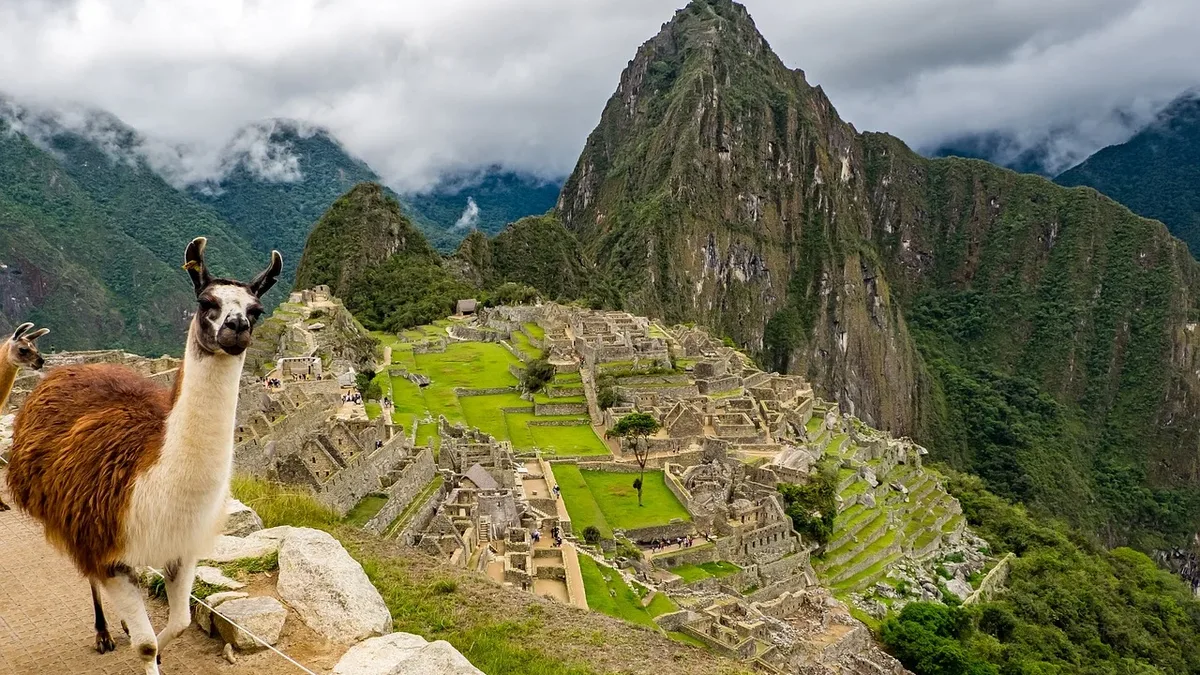
Peru is a geographically and ecologically diverse country located on the central western coast of South America, bordered by Ecuador, Colombia, Brazil, Bolivia, Chile, and the Pacific Ocean. Its territory is starkly divided into three major longitudinal regions: the arid coastal desert (costa), the high Andes mountains (sierra), and the Amazon rainforest (selva). With a population exceeding 33 million, it is a multiethnic society where Spanish is the official language, but Quechua, Aymara, and numerous Amazonian languages are also officially recognized. Its economy is classified as upper-middle income and is heavily reliant on exports of copper, gold, zinc, and agricultural products like asparagus and grapes, alongside a robust services sector. The capital and largest city is Lima, a sprawling metropolitan area that is the country's political, commercial, and industrial heart. Peru's global cultural footprint is significant, renowned for its ancient archaeological sites like Machu Picchu, its rich gastronomy, and its complex syncretic traditions in music, art, and religion.
What to know
Understanding Peru requires acknowledging its profound regionalism, where identity, economy, and daily life differ drastically between the coast, highlands, and jungle, often leading to political and social tensions. Its democratic system, while stable in recent decades, remains fragile, with frequent confrontations between the executive and legislative branches and low public trust in political parties and institutions. The economy, though growing, is characterized by a large informal sector, persistent inequality, and a vulnerability to fluctuations in global commodity prices. Visitors and analysts should note the ongoing legacy of the internal conflict, with continued efforts in truth, reconciliation, and the search for the disappeared, which remains a sensitive and unresolved national issue. Peruvian cuisine is a point of immense national pride, a product of fusion and local ingredients, but it also reflects the socioeconomic divides in access to nutrition and food security. Finally, environmental concerns are critical, encompassing the protection of the Amazon from deforestation, managing water scarcity on the coast, and the social conflicts surrounding large-scale mining projects.
Common questions
What are the main challenges facing Peru today? Key issues include political instability, corruption, crime, social inequality, and the need for economic diversification beyond extractive industries. How does Peru's geography affect its development? The rugged Andes create logistical and infrastructure challenges, fragment the national market, and concentrate economic activity and population on the coast, particularly in Lima. What is the current status of Indigenous communities in Peru? While there is greater official recognition and some political representation, many communities, especially in the Andes and Amazon, face poverty, land conflicts, and limited access to basic services. Is Peru safe for travel? Most tourist areas are safe with standard precautions, but travelers should be aware of petty crime in cities and research conditions for trekking or visiting remote regions. Why is Peruvian food so famous globally? Its fame stems from its unique blend of Indigenous, Spanish, African, Chinese, and Japanese influences, its biodiversity of native ingredients, and its innovative culinary movement. What is the relationship between Peru and its neighbors? It maintains generally cooperative but complex relations, with historical tensions with Chile largely managed through international courts and ongoing integration efforts with Ecuador, Colombia, and Bolivia.
Pros and cons
A significant advantage of Peru is its immense cultural and natural wealth, which provides a strong foundation for tourism, a unique national identity, and a resilient, creative populace. Its economic growth over recent decades has lifted many out of poverty and created a burgeoning middle class, supported by prudent macroeconomic management. The country's biodiversity and agricultural potential offer opportunities for sustainable development and niche exports beyond mining. However, a major con is the persistent and corrosive political instability, where short presidential terms, constant confrontations, and corruption scandals hinder long-term policy planning and public trust. The economy remains overly dependent on volatile mining exports, and the informal sector is vast, limiting tax revenue and worker protections. Many who choose to invest or settle here regret the bureaucratic inefficiency, the stark inequality that manifests in security and service disparities, and the common mistake of underestimating the profound social and logistical divisions between its geographic regions.
Who it suits
Peru suits historians, archaeologists, and anthropologists fascinated by layered civilizations and living Indigenous cultures that maintain deep connections to their pre-Columbian past. It appeals to adventurous travelers and nature enthusiasts seeking experiences from high-altitude trekking and Amazonian exploration to desert coastlines, provided they are adaptable and respectful of local conditions. Entrepreneurs and investors with a tolerance for risk and a long-term view may find opportunities in sectors beyond mining, such as agriculture, technology, and sustainable tourism. It is a place for individuals deeply interested in culinary arts, from researchers of food history to chefs inspired by its ingredient diversity and fusion techniques. Academics and development professionals focused on studying or addressing challenges of inequality, post-conflict reconciliation, and environmental governance will find a complex and compelling case study. Ultimately, it suits those who can navigate and appreciate profound contrasts, between modernity and tradition, wealth and poverty, the coastal metropolis and the rural highlands, without seeking a simplistic or uniform national narrative.
Latest Peru news
Latest reporting
Rubio Visits Latin America
Secretary of State Marco Rubio is visiting Colombia, Peru, and Ecuador to discuss cooperation against narco-terrorism.

Strong Earthquake Hits Southern Peru
A 7.2 magnitude earthquake struck the Andean region of Ayacucho in southern Peru, causing minor damage to homes and injuring at least three people.