Haitian Migration
| Country of origin | Haiti |
|---|---|
| First created | Late 20th century |
| Original use | To describe the pattern of human movement from Haiti |
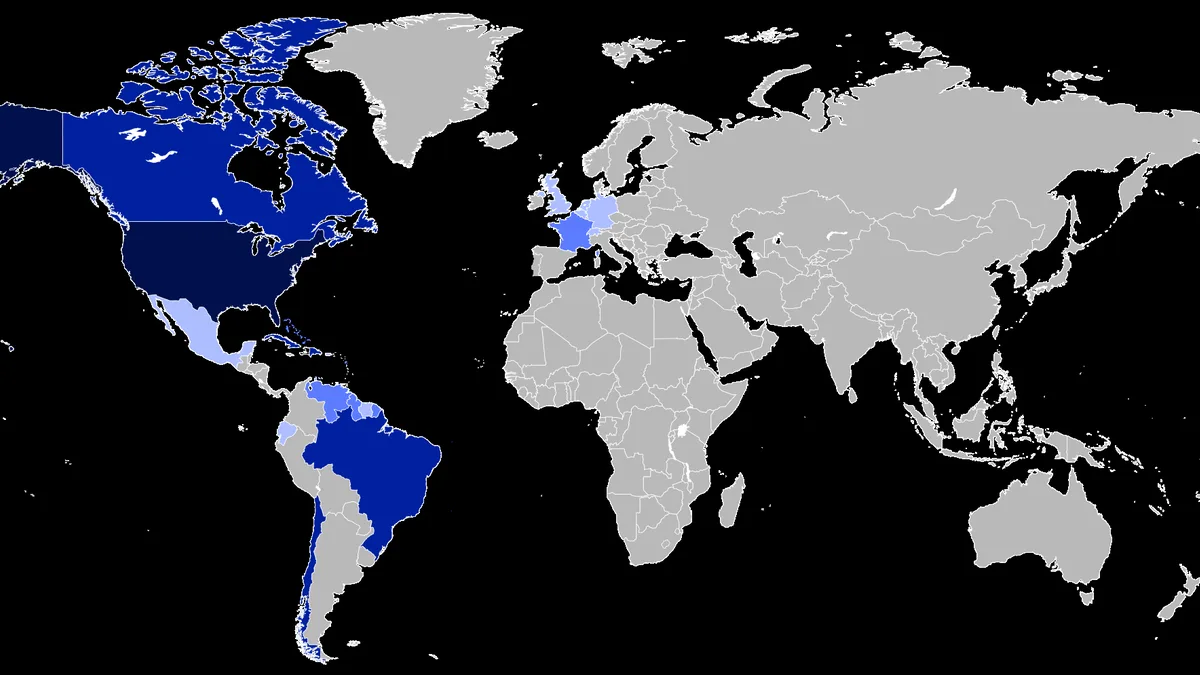
| Primary destinations | United States, Dominican Republic, Canada, France, The Bahamas |
| Major drivers | Political instability, economic hardship, environmental disasters |
| Legal statuses | Varied (includes asylum seekers, refugees, temporary protected status, undocumented migrants) |
| Key historical periods | Duvalier era (1957-1986), post-1991 coup, post-2010 earthquake |
Origin and history
Haitian migration as a significant regional phenomenon originates from the Republic of Haiti on the island of Hispaniola. Its modern contours began to form in the mid-20th century, particularly from the 1960s onward, driven by the political repression of the Duvalier dictatorship. This period established patterns of movement to neighboring countries like the Dominican Republic and farther afield to North America. Subsequent decades saw migration flows intensify and diversify due to persistent political instability, severe economic crises, and a series of devastating natural disasters. The 2010 earthquake marked a pivotal moment, displacing hundreds of thousands and accelerating movement across the Americas. This history has created a diaspora that is now a fundamental feature of Haiti's national story and its relationship with the hemisphere.
What it is for
Haitian migration is a survival strategy and a quest for stability undertaken by individuals and families facing extreme hardship. It functions as a primary mechanism for people to escape poverty, political violence, and environmental degradation in one of the hemisphere's most fragile states. The process aims to secure access to basic necessities such as reliable income, food security, healthcare, and education for children that are often unavailable at home. Remittances sent back by migrants constitute a critical economic lifeline, supporting entire communities and representing a significant portion of Haiti's national income. For receiving countries, it represents a source of labor, often filling specific niches in sectors like agriculture, construction, and service industries. Ultimately, it is a complex response to the failure of the Haitian state to provide for the security and welfare of its citizens.
Overview
Contemporary Haitian migration is characterized by multidirectional flows across the Americas, with routes and destinations shifting based on policies and crises. A long-standing and complex migration exists to the neighboring Dominican Republic, involving both seasonal labor and permanent settlement, though often under precarious legal conditions. Since the mid-2010s, a prominent and visible route has involved overland travel through South and Central America, often starting with a flight to Ecuador or Brazil, followed by a perilous journey northward. Chile and Brazil emerged as major destinations following the 2010 earthquake, though economic contractions later led to secondary migrations from these countries. The United States remains a primary goal for many, with arrivals by sea and land, while Canada also hosts a significant Haitian community. This movement is not a single exodus but a dynamic, adaptive network of paths shaped by closed doors and new opportunities.
What to know
Haitian migrants often undertake journeys of extraordinary risk, traversing the dense Darien Gap between Colombia and Panama, a region known for its dangerous terrain and criminal elements. They frequently face changing and restrictive immigration policies in transit and destination countries, which can lead to sudden expulsions or prolonged legal limbo. Racial discrimination and anti-Black prejudice are persistent challenges in several Latin American countries, affecting access to housing, employment, and fair treatment. Many migrants possess high levels of education and professional skills but are forced to accept informal, low-wage work due to lack of documentation or non-recognition of credentials. The migration flow includes a significant number of children, unaccompanied minors, and pregnant women, creating acute humanitarian protection needs. Understanding this phenomenon requires recognizing it as a refugee-like flow, though most migrants do not receive formal refugee status under international law.
Common questions
Why do Haitians leave their country if the journey is so dangerous? The conditions of extreme poverty, gang violence that controls large parts of the capital, and a near-total lack of public services make the risks of migration seem preferable to the certainty of suffering at home. Do most Haitian migrants want to go to the United States? While the U.S. is a primary destination, many initially sought stability in other Latin American nations, only moving north when local economies faltered or legal status became untenable. Why don't they just stay in the first safe country they reach? The principle of "first safe country" is not consistently applied in the Americas, and migrants often pursue networks where they have family or perceive better long-term integration prospects. Are they all fleeing the 2010 earthquake? While the earthquake was a catalyst, current migration is driven by a compounded crisis of politics, security, and economy that has worsened significantly since then. How do they afford the journey? Families often pool resources or go into debt, paying smugglers in stages, with the expectation that those who arrive first will later remit funds to bring others. What languages do Haitian migrants speak? Most speak Haitian Creole as a first language, with French as a second language for some; Spanish and Portuguese are learned in transit and destination countries.
Pros and cons
A primary benefit of migration is the immediate improvement in personal security and access to basic sustenance for individuals escaping acute violence and hunger. The remittances sent home, estimated to be a substantial portion of Haiti's GDP, provide essential support to families and partially stabilize the local economy. For receiving countries, migrants often fill labor shortages in demanding physical jobs, contributing to agricultural harvests and construction projects. However, the cons are severe and pervasive, beginning with the high human cost of the journey, including exposure to exploitation, trafficking, injury, and death. Many migrants experience a painful de-skilling process, where educated professionals work in menial jobs, leading to frustration and unmet potential. A common mistake is underestimating the rigidity of immigration systems and the difficulty of obtaining legal status, resulting in years of precarious living, detention, or traumatic deportation after immense effort and investment.
Who it suits
This path suits individuals and families with a high tolerance for risk and uncertainty, who have exhausted all local options for survival and advancement. It is often pursued by those who have pre-existing family or community networks in a destination country that can provide initial shelter and guidance. The journey demands significant physical and mental resilience to endure long overland treks, harsh conditions, and potential exploitation by smugglers. It suits those who are prepared for a long-term project of integration, often starting from a position of legal and social vulnerability in a new society. It is particularly undertaken by parents seeking any possible opportunity to secure a future for their children, even at great personal sacrifice. Ultimately, it is a path chosen not out of desire but out of necessity, by those for whom staying in Haiti presents a clear and immediate threat to their fundamental well-being.