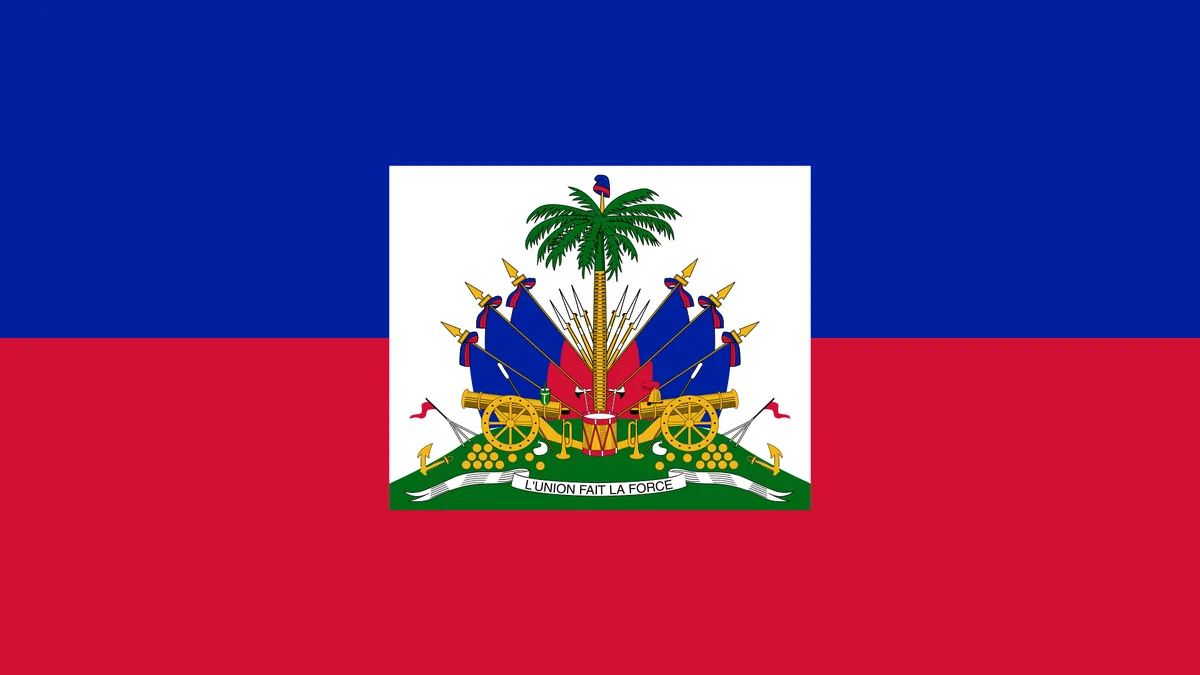
Haiti
| Official name | Republic of Haiti |
|---|---|
| Capital | Port-au-Prince |
| Official languages | French, Haitian Creole |
| Currency | Haitian gourde (HTG) |
| Geographical position | Caribbean, western third of the island of Hispaniola |
| Original use (historical context) | Site of the first permanent European settlement in the Americas (La Navidad, 1492) and later a major French colonial sugar producer. |
| First created (as sovereign state) | 1804 (declaration of independence from France) |
Origin and history
Haiti is a nation located on the western third of the island of Hispaniola in the Caribbean Sea, sharing the island with the Dominican Republic. Its origins are deeply rooted in the indigenous Taíno civilization, which inhabited the island prior to European contact. The modern state of Haiti emerged from the French colony of Saint-Domingue, which was established in the 17th century and became one of the most profitable colonies in the world due to its sugar and coffee plantations worked by enslaved Africans. The Haitian Revolution, beginning in the late 18th century, was a successful anti-slavery and anti-colonial insurrection by self-liberated slaves against French colonial rule. This revolution culminated in the declaration of independence on January 1, 1804, establishing Haiti as the world's first independent black republic and the second independent nation in the Americas after the United States. The 19th and 20th centuries were marked by political instability, foreign intervention including a prolonged U.S. military occupation in the early 20th century, and a series of authoritarian regimes.
What it is for
Haiti functions as a sovereign nation-state with its own government, legal system, and cultural identity. Its primary purpose is to provide governance, security, and social services to its population within its defined territorial borders. The state engages in international diplomacy as a member of the United Nations and other multilateral organizations, representing Haitian interests on the global stage. Domestically, it is responsible for maintaining infrastructure, public health, and education systems, though these have been historically challenged. The nation serves as the homeland for the Haitian people, preserving and developing a unique culture that blends African, Taíno, and European influences, most notably expressed through the Haitian Creole language and Vodou religion.
Overview
Haiti occupies an area of approximately 27,750 square kilometers, characterized by rugged mountainous terrain, coastal plains, and a tropical climate. The population is estimated to be over 11 million, predominantly of African descent, with Haitian Creole and French as the official languages. Its capital and largest city is Port-au-Prince, which is the nation's primary economic and administrative center. The economy is one of the least developed in the Western Hemisphere, relying heavily on agriculture, remittances from the diaspora, and informal trade, with garment assembly being a significant industrial sector. Politically, Haiti is a unitary semi-presidential republic, though it has experienced chronic instability, frequent changes in government, and persistent challenges to democratic governance. Culturally, Haiti is renowned for its vibrant art, particularly painting and sculpture, its rich narrative folklore, and its distinct musical genres such as kompa and rasin.
What to know
Understanding Haiti requires recognizing the profound and lasting impact of the 2010 catastrophic earthquake, which devastated Port-au-Prince and caused massive loss of life and infrastructure, from which the country has not fully recovered. Political crises and gang violence, particularly in the capital, have created severe security challenges and hampered humanitarian and development efforts. The Haitian diaspora, particularly large communities in the United States, Dominican Republic, Canada, and the Bahamas, plays a crucial role in the nation's economy through remittances and maintains strong cultural ties. Environmental degradation, including extensive deforestation and soil erosion, is a critical issue that exacerbates the country's vulnerability to natural disasters like hurricanes. Haiti's relationship with the Dominican Republic is complex, shaped by a shared history, significant cross-border migration, and periodic tensions over immigration policy and citizenship rights. The Vodou religion is a widely practiced and fundamental aspect of Haitian spiritual and cultural life, often misunderstood outside the country but constitutionally recognized since 1987.
Common questions
Is Haitian Creole the same as French? No, Haitian Creole (Kreyòl) is a distinct language with its own syntax and grammar, born from the contact between French and various West African languages during the colonial period, and it is the primary language spoken by all Haitians. What is the current security situation? Haiti faces a severe and protracted security crisis dominated by powerful armed gangs that control significant portions of the capital and major routes, leading to widespread violence, kidnappings, and a near-collapse of state authority. Why is Haiti often described as the poorest country in the Western Hemisphere? This stems from a confluence of historical factors including the crippling post-independence debt to France, political instability, foreign intervention, natural disasters, and systemic governance challenges that have hindered sustainable economic development. What is the status of the government? Haiti has experienced extreme political volatility, with the assassination of President Jovenel Moïse in 2021 leading to a prolonged transitional governance crisis and the installation of a transitional presidential council in 2024. How do natural disasters affect the country? Due to its location, deforestation, and inadequate infrastructure, Haiti is highly vulnerable to hurricanes, floods, and earthquakes, which repeatedly cause humanitarian disasters and set back development gains. What is kompa music? Kompa, also known as compas, is a popular guitar-based dance music genre that originated in Haiti in the mid-20th century, characterized by its smooth, rhythmic sound and is a cornerstone of Haitian cultural expression.
Pros and cons
A significant advantage is Haiti's resilient and vibrant culture, which has produced globally influential art, music, and literature despite immense hardship, fostering a strong sense of national identity. The strategic location in the Caribbean offers potential for tourism and trade, with historical sites like the Citadelle Laferrière being UNESCO World Heritage Sites. However, the most profound con is the extreme and systemic political instability, which manifests in weak institutions, corruption, and recurrent violence, creating an environment where long-term planning and foreign investment are exceedingly difficult. The near-total lack of reliable public services, including consistent electricity, clean water, and waste management, severely impacts daily life and health outcomes for the majority of the population. Common mistakes by external actors include imposing short-term solutions without deep local engagement or historical understanding, and by individuals, underestimating the complex security risks when traveling outside secured compounds. Many Haitians, particularly the educated youth, regret the lack of opportunity and the necessity of emigration to achieve personal and professional stability, leading to a persistent brain drain.
Who it suits
Haiti suits individuals with a deep professional commitment to humanitarian aid, development work, or diplomatic service, who are prepared to operate in a high-risk, resource-constrained environment. It is a place for scholars and researchers focused on post-colonial studies, disaster resilience, political anthropology, or the unique cultural and linguistic developments of the African diaspora. The environment demands immense resilience and adaptability from its own citizens, who navigate daily challenges with ingenuity and a strong communal spirit rooted in family and neighborhood networks. For the Haitian diaspora, maintaining ties often involves supporting family through remittances and engaging in transnational community efforts aimed at development and crisis response from abroad. It is not suited for casual tourism or those seeking predictable logistics, stable business environments, or comprehensive state-provided safety nets. Ultimately, Haiti suits those who understand its weighty historical legacy and are engaged with its ongoing struggle for sovereignty, stability, and a sustainable future.