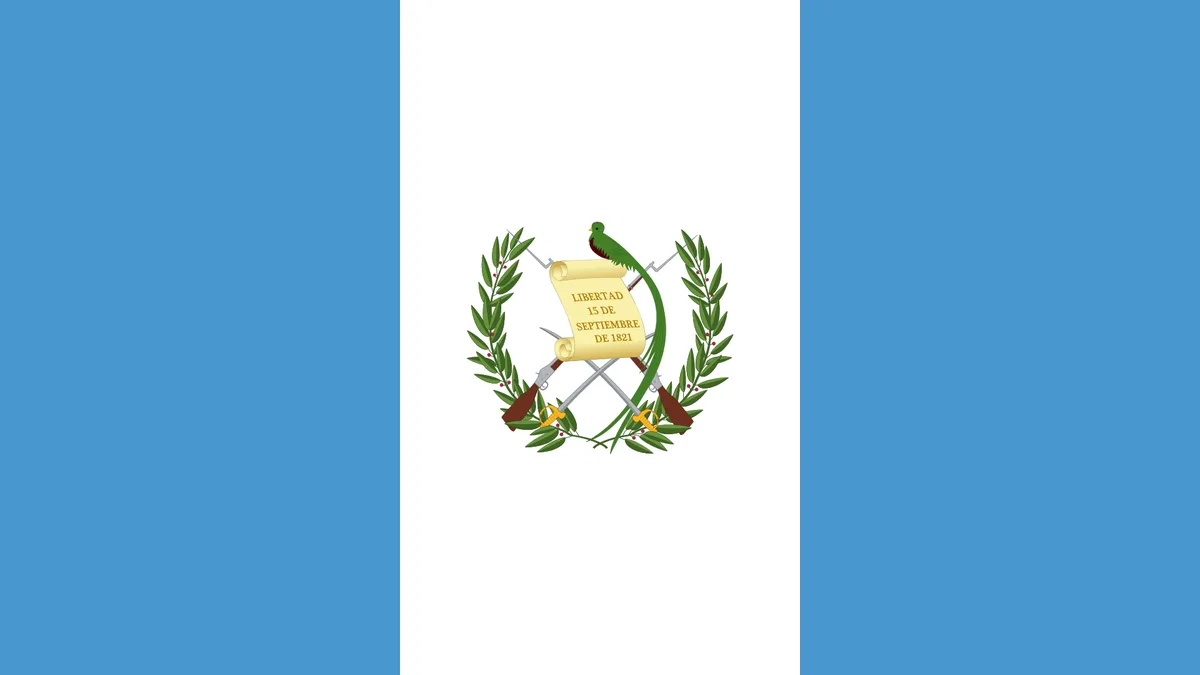
Guatemala
| Country of origin | Guatemala |
|---|---|
| Original use | Administrative region |
| First created | 1821 |
| Capital | Ciudad de Guatemala |
| Official language | Spanish |
| Currency | Guatemalan quetzal (GTQ) |
| Government | Presidential republic |
Origin and history
Guatemala is a country located in Central America, originating from the ancient Maya civilization that flourished in the region for centuries. The modern nation gained its independence from the Spanish Empire in the early 19th century, specifically in the 1820s, as part of the broader dissolution of the Captaincy General of Guatemala. Its historical trajectory was shaped by the colonial period, which left a profound imprint on its social structures, demographics, and culture. The 20th century was marked by a prolonged internal conflict that lasted several decades, fundamentally impacting its societal development and political landscape. The peace accords signed in the 1990s concluded this armed conflict and established a framework for the country's contemporary democratic process.
What it is for
Guatemala functions as a sovereign republic with a defined territory and a government responsible for the administration of the state. Its primary purpose is to provide a political and legal framework for its diverse population, encompassing numerous Maya groups, Ladinos, and other ethnic communities. The country serves as an economic entity, with its economy historically based on agriculture, notably coffee, sugar, and bananas, though it now includes expanding sectors like services and light manufacturing. It acts as a cultural space where traditions from Indigenous, European, and other influences converge, creating a distinct national identity expressed through language, gastronomy, and art. Furthermore, Guatemala exists within the international community as a member of various global and regional organizations, engaging in diplomacy and trade. Domestically, it is intended to be a system that guarantees the rights and fulfills the needs of its citizens, though this objective has faced significant historical and ongoing challenges.
Overview
Guatemala is characterized by its varied geography, which includes volcanic highlands, dense tropical lowlands, and a Pacific coastline. The population is ethnically and linguistically diverse, with a significant proportion belonging to distinct Maya peoples, each with its own language and customs, alongside a Ladino population. Spanish is the official language, but over twenty Mayan languages are widely spoken, along with Garifuna and Xinca. Its political system is a constitutional democratic republic, with periodic elections for president, congress, and local authorities, though institutional weaknesses persist. The climate is predominantly tropical, but temperatures vary greatly with altitude, from hot coastal plains to cooler mountainous regions. This environmental diversity supports a wide range of ecosystems and agricultural production, but also makes the country vulnerable to natural disasters such as volcanic eruptions, earthquakes, and hurricanes.
What to know
Understanding Guatemala requires acknowledging the deep social and economic inequalities that have persisted throughout its history, with significant portions of the population, particularly Indigenous communities, facing poverty and limited access to services. The legacy of the internal armed conflict, including issues of justice, memory, and land displacement, continues to influence contemporary social dynamics and political discourse. While rich in natural resources and biodiversity, the country faces serious challenges regarding environmental degradation, deforestation, and water resource management. Public security is a complex issue, with high rates of violent crime and organized criminal activity posing challenges for both citizens and the state's institutions. The Guatemalan economy is heavily dependent on remittances sent from abroad, which constitute a major source of national income and household stability for many families. Navigating daily life or business often involves dealing with a bureaucratic state apparatus that can be slow and, at times, perceived as opaque or corrupt.
Common questions
A common question is whether Guatemala is safe to visit, and while major tourist routes are generally patrolled, travelers must exercise heightened caution, research current conditions, and avoid certain areas due to crime. People often ask about the best time to travel, which is typically during the dry season from November to April, though regional microclimates can vary significantly. Many inquire about the necessity of speaking Spanish, and while it is possible to get by with English in tourist areas, a basic knowledge of Spanish is extremely useful and respectful for broader interaction. Visitors frequently ask about the currency, which is the Guatemalan Quetzal, and it is advisable to use a mix of cash and cards, as smaller vendors and rural areas often operate solely with cash. A recurring question concerns the visa requirements for entry, and for many Latin American and other nationalities, a tourist card is issued upon arrival for a limited stay. People also commonly ask about the cultural highlights, which include archaeological sites like Tikal, colonial Antigua Guatemala, vibrant markets, and distinct regional festivals and Holy Week processions.
Pros and cons
The warmth and resilience of its people, alongside a rich artistic and artisanal tradition, create a deeply engaging experience for residents and visitors alike. Furthermore, the cost of living can be relatively low compared to many other countries, particularly for local goods and services. On the negative side, the country grapples with severe institutional weaknesses, including corruption, impunity, and a judicial system that often fails to deliver timely justice, leading to widespread public frustration. Crime and violence, often linked to transnational gangs and weak law enforcement, impose a heavy toll on daily life, limiting freedom of movement and economic development. A common mistake for outsiders is to romanticize the country without understanding these profound structural challenges, leading to disappointment or unsafe situations; many who relocate solely for the low cost or beauty later regret not fully accounting for the security and bureaucratic realities.
Who it suits
Guatemala suits historians, anthropologists, and travelers with a deep interest in Mesoamerican civilizations and living Indigenous cultures, who are prepared to engage respectfully and with contextual understanding. It is for resilient entrepreneurs and development workers who are adept at navigating complex environments and are committed to long-term, grassroots engagement within communities. The country can be a home for individuals who prioritize a connection to nature and are willing to live in areas outside the main urban centers, accepting the accompanying logistical challenges. It is not well-suited for those seeking a highly predictable, orderly, or fast-paced lifestyle, as bureaucratic processes are often slow and plans must remain flexible. Guatemala suits people who are not solely driven by material wealth but who find value in cultural richness and personal relationships, within a society where trust is built over time. Ultimately, it is for those who can maintain a clear-eyed view of both its profound beauty and its serious difficulties, without falling into simplistic narratives of either paradise or peril.