
Glossary Of International Terms
| Name | Glossary Of International Terms |
|---|---|
| Original use | To define and standardize terms used in international diplomacy, trade, and law. |
| Subject scope | Terms from diplomacy, international law, economics, and multilateral institutions. |
| Primary language | English |
| Typical structure | Alphabetical listing of terms with concise definitions. |
| Common publishers | International organizations, academic institutions, and governmental bodies. |
Origin and history
The Glossary Of International Terms is a conceptual and practical tool that originated from the field of international relations and diplomacy, primarily within Western academic and multilateral institutions. Its development accelerated in the mid-20th century, following the establishment of the United Nations and the complex geopolitical landscape of the Cold War. The need for a standardized set of definitions arose from the proliferation of treaties, legal instruments, and diplomatic communications between nations with different legal and political traditions. International organizations, such as the UN and its specialized agencies, played a central role in systematizing terminology for clear and unambiguous dialogue. This lexicographical work was further driven by the expansion of international trade law and humanitarian law, which required precise definitions to be operational across jurisdictions. Consequently, the glossary is not a single published book but an evolving collection of terms consolidated from various official documents and legal texts over decades.
What it is for
The primary function of the Glossary Of International Terms is to provide precise and authoritative definitions for words and phrases used in the context of international affairs, law, and diplomacy. It serves to eliminate ambiguity in treaties, resolutions, and official communications between states and international organizations. For students and researchers, it is an essential reference tool for understanding specialized literature in fields like international law, political science, and development studies. Diplomats and negotiators rely on these standardized definitions to ensure all parties share a common understanding of key concepts, such as "sovereignty," "non-intervention," or "most-favored-nation." It also aids journalists and translators in accurately reporting and interpreting complex international events by providing clear terminological boundaries. Ultimately, its purpose is to facilitate clearer communication and reduce the risk of misunderstandings that could have political or legal consequences.
Overview
A Glossary Of International Terms encompasses a wide range of vocabulary from multiple spheres of cross-border interaction. Its core typically includes terms from public international law, such as "pacta sunt servanda," "jus cogens," and "state succession." It also covers diplomatic protocol, defining roles like "chargé d'affaires" and concepts like "persona non grata." Economic and trade terminology, including "dumping," "tariff quotas," and "intellectual property rights," forms another significant component. Humanitarian and human rights law contributes terms like "crimes against humanity," "refugee," and "proportionality." The glossary also integrates vocabulary from security and disarmament agreements, such as "non-proliferation" and "confidence-building measures." Importantly, it reflects the dynamic nature of international relations, continually incorporating new terms related to cybersecurity, climate change, and global health governance.
What to know
It is crucial to understand that there is no single, universally accepted version of this glossary; definitions can vary slightly depending on the institutional source, such as the UN, WTO, or the International Court of Justice. Many terms have specific legal meanings that differ significantly from their colloquial use in everyday language, such as "aggression," "genocide," or "development." The definitions are often rooted in specific historical contexts and treaties, meaning their interpretation can be subject to debate and evolution over time. For a Latin American reader, it is particularly relevant to note how terms like "intervention," "self-determination," and "territorial integrity" have been shaped by regional history and doctrine. The glossary is inherently multilingual, and official translations into Spanish or Portuguese are as authoritative as the English or French originals in their respective legal contexts. Mastery of this terminology is less about memorization and more about understanding the conceptual frameworks and legal consequences the terms carry within international discourse.
Common questions
A common question is whether these definitions are legally binding; while the terms themselves are defined in binding treaties, the glossary as a compilation is a reference tool, not a source of law itself. People often ask who decides on the final definition of a term, which is typically a process of state negotiation and consensus reflected in international conventions or rulings by judicial bodies. Another frequent inquiry concerns the difference between similar terms, such as "asylum" versus "refugee status," or "sanctions" versus "countermeasures." Readers wonder how quickly new terms are added, which depends on the pace of international lawmaking, with terms like "ecocide" or "cyber warfare" currently under discussion but not yet universally codified. Many question the practical utility of such a glossary for those not directly involved in diplomacy, though it is fundamental for anyone analyzing international news, legal documents, or academic papers. Finally, a key question is where to find reliable versions, which are best sourced from the official websites and legal databases of relevant international organizations and courts.
Pros and cons
A major advantage of using a standardized Glossary Of International Terms is the clarity and precision it brings to complex discussions, reducing the risk of diplomatic incidents or treaty violations due to semantic confusion. It provides an indispensable foundation for academic study and professional practice in international fields. However, a significant drawback is that it can create an illusion of fixed meanings in a domain where state practice and power politics often lead to contested interpretations and evolution of concepts. Users who rely too rigidly on glossary definitions without understanding their political and historical context can develop a superficial or misleading understanding of international events. Another common problem is that the glossary can reflect the perspectives and priorities of the dominant actors in the international system, potentially marginalizing alternative interpretations from the Global South. The technical and legalistic language can also act as a barrier to entry, making international affairs seem inaccessible to the general public. A frequent mistake is to treat the glossary as an exhaustive dictionary rather than a snapshot of terms whose meanings are continually being negotiated.
Who it suits
This resource is essential for professionals directly engaged in international work, including diplomats, international lawyers, treaty negotiators, and officials in multilateral organizations. It is equally suited for academics and university students specializing in international relations, law, political science, or global studies, who require precise terminology for their research and analysis. Journalists and reporters who cover foreign affairs, conflict, or global economics benefit greatly from consulting these definitions to ensure accurate reporting. Translators and interpreters working with official UN or diplomatic documents find it an indispensable tool for their technical work. It also suits activists and professionals in non-governmental organizations operating in the humanitarian, development, or human rights sectors, where understanding the legal framework is crucial. However, it is less suitable for casual readers seeking simple explanations of current events without the willingness to engage with the underlying legal and conceptual frameworks that give the terms their weight.
Latest Glossary Of International Terms news
Latest reporting

Argentina Seeks ITLOS Order to Halt Falklands Oil Project
Argentina has filed for emergency measures at the International Tribunal for the Law of the Sea to stop UK-backed oil exploration near the Falkland...

Argentina sets two-week deadline for UK over Falklands oil
President Javier Milei has threatened to take the UK to an international tribunal unless it halts the Sea Lion oilfield project near the Falkland...
US-Canada Trade War Strains Cross-Border Towns
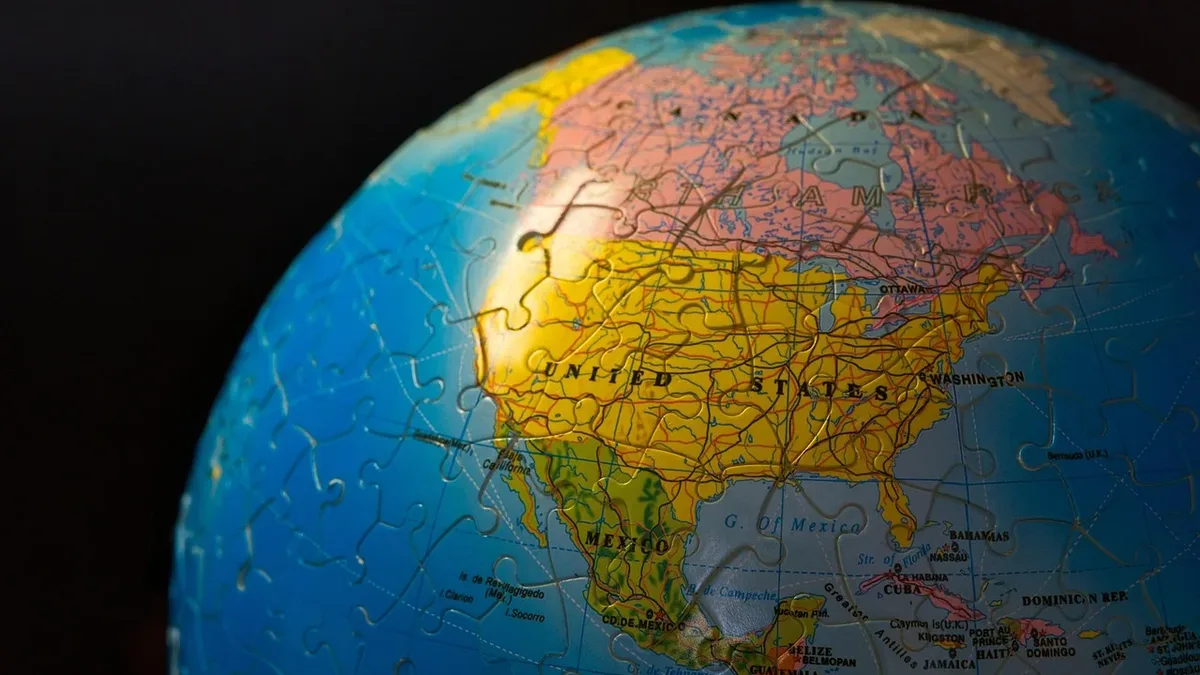
Residents of Fort Frances, Ontario, and International Falls, Minnesota, report rising tensions and economic strain due to the US-Canada trade war.
Nicaragua urges ICJ to keep German Gaza arms case
Nicaragua has argued at the International Court of Justice that Germany's arms exports to Israel violate the Genocide Convention.

Israel confirms firing at vehicle carrying 5-year-old Hind Rajab in Gaza
The Israeli army has confirmed that it fired at a vehicle carrying Hind Rajab and her family in Gaza, resulting in the death of several family...