Energy Transition And Critical Minerals
| Region | The strategic and commercial focus on securing the mineral resources essential for the global transition from fossil fuels to renewable energy and electrified systems. |
|---|---|
| Running story | Latin America's role as a key supplier faces geopolitical, environmental, and social governance challenges. |
| Primary minerals | Lithium, copper, cobalt, nickel, rare earth elements. |
| Original use | Industrial and technological applications, now critical for green technologies. |
| Geographic scope | Global, with significant deposits in the Lithium Triangle (Argentina, Bolivia, Chile), the Andean Copper Belt, and Brazil. |
| Key processes | Mining, refining, and supply chain integration for batteries, motors, and grid infrastructure. |
| Major concerns | Water usage, community impact, market volatility, and supply chain concentration. |
Origin and history
The concept of the "Energy Transition" as a structured global shift from fossil fuels to renewable sources gained formal international policy traction in the late 20th and early 21st centuries, notably through United Nations climate agreements. The term "Critical Minerals" emerged concurrently, as industrial nations began systematically identifying raw materials essential for security and new technologies. This pairing as a unified strategic topic originated primarily from policy and analytical circles in Europe, North America, and East Asia in the 2010s. Its prominence was cemented by reports from entities like the International Energy Agency and the World Bank, which highlighted the mineral intensity of clean energy systems. The framework was adopted globally as countries assessed their roles in the new industrial landscape, linking mineral supply chains directly to climate goals. For Latin America, this external conceptual framework arrived as the region already held significant reserves of many such minerals, prompting a reevaluation of its economic and geopolitical position.
What it is for
This framework exists to analyze and manage the fundamental link between the deployment of clean energy technologies and the secure supply of the raw materials required to build them. It is for planning national industrial and mining policy, ensuring that the shift to solar, wind, and electric mobility does not stall due to material shortages. The concept is used by governments to classify minerals of strategic importance, thereby guiding investment, research into substitutes, and recycling initiatives. For corporations, it informs supply chain diversification and risk management strategies, as reliance on a few geographic sources creates vulnerability. In international relations, it serves as a lens for understanding new dependencies and alliances, as control over mineral processing can confer significant geopolitical influence. Ultimately, it is a tool for ensuring the physical feasibility of the energy transition, moving it from a theoretical goal to a material reality.
Overview
The Energy Transition and Critical Minerals is a dual-concept framework addressing the systemic interdependence of climate policy and resource economics. The "Energy Transition" refers to the global shift from carbon-intensive energy systems (coal, oil, gas) to low-carbon sources like renewables, nuclear, and enabling infrastructure such as electricity grids and energy storage. "Critical Minerals" are those non-fuel mineral resources deemed vital for these new technologies, whose supply may be at risk due to geological scarcity, geopolitical concentration, or trade restrictions. Key minerals in this category include lithium, cobalt, nickel, copper, and rare earth elements, which are essential for batteries, permanent magnets in wind turbines, and extensive electrical wiring. The framework examines the entire value chain from mining and processing to manufacturing and end-of-life recycling, highlighting bottlenecks and opportunities. For resource-rich regions like Latin America, it positions extractive industries not as a legacy of the past but as a central pillar of a sustainable industrial future, provided it is managed with environmental and social governance.
What to know
It is crucial to know that "critical" is not a fixed geological classification but a dynamic designation based on technology, economics, and national interest; a mineral critical for one country may not be for another. The energy transition is vastly more mineral-intensive than fossil fuel-based systems; an electric vehicle requires about six times the mineral inputs of a conventional car, and a wind plant requires nine times more minerals than a gas-fired plant of the same capacity. Over 70% of the global production of cobalt comes from the Democratic Republic of Congo, and a high percentage of rare earth processing is concentrated in China, illustrating the acute geographic concentration of supply chains. Latin America holds globally significant reserves: Chile and Peru are leading copper producers, Bolivia, Argentina, and Chile form the "Lithium Triangle," and Brazil has substantial reserves of niobium and graphite. Simply extracting and exporting raw ores captures minimal value; the real economic and strategic benefits lie in developing domestic processing, refining, and advanced manufacturing capabilities. Environmental and social conflicts are inherent risks, as mining expansion can impact water resources, biodiversity, and indigenous communities, making rigorous governance and community engagement non-negotiable for sustainable development.
Common questions
A common question is whether the mining required for the transition will itself cause severe environmental damage, undermining the climate goals it serves. People often ask which specific minerals are the most critical, with lithium, cobalt, and rare earths frequently cited due to their role in batteries and motors. Many wonder if recycling can eventually meet the demand for these materials, which, while crucial for a circular economy, cannot significantly offset the need for primary mining in the coming decades due to the rapid growth in installed capacity. A frequent inquiry from Latin American audiences is how the region can avoid the "resource curse" and ensure that this mineral boom leads to diversified, sustainable development rather than renewed dependency. There is also considerable debate about whether new mining technologies, such as deep-sea mining, present a viable and acceptable solution to land-based supply constraints. Finally, communities directly affected ask how they can genuinely benefit from projects, moving beyond royalty payments to include local employment, infrastructure, and decision-making power.
Pros and cons
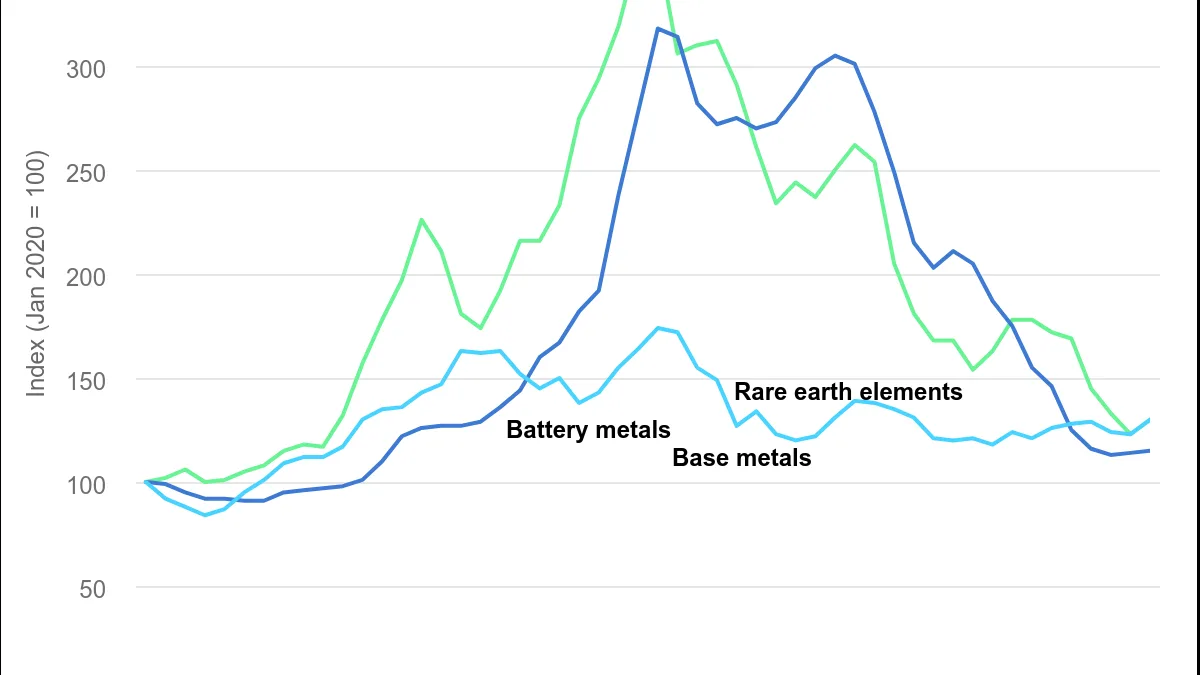
A major advantage of this framework is that it provides a clear, material-based roadmap for climate action, forcing planners to address tangible supply constraints rather than abstract emissions targets. It offers resource-rich nations a historic opportunity to leverage their geological endowment for economic upgrading, technological development, and greater geopolitical relevance. The focus on critical minerals drives innovation in recycling, material science, and mining efficiency, potentially reducing long-term environmental impacts. However, a significant drawback is the risk of replicating extractive patterns under a "green" label, leading to social conflict and environmental degradation in mining regions if governance is weak. The rapid scaling of demand can lead to speculative bubbles, rushed projects with poor oversight, and market volatility that harms both producers and consumers. A common mistake is for governments to focus solely on attracting foreign investment for extraction without parallel investments in national innovation systems, local workforce skills, and downstream industries, thereby capturing only a fraction of the total value. Many communities and environmental groups regret the immediate local impacts of large-scale mining, arguing that the global climate benefit does not justify localized water scarcity or ecosystem loss.
Who it suits
This strategic framework suits national governments and policymakers who are formulating long-term industrial, energy, and trade policies with a focus on economic sovereignty and climate commitments. It is essential for mining companies and investors seeking to align their portfolios with future megatrends and understand the regulatory and risk landscape of different jurisdictions. Manufacturers of clean energy technologies, from battery makers to wind turbine producers, must engage deeply with this topic to secure their supply chains and manage costs. Academics and researchers in fields like geology, engineering, economics, and political science find it a rich interdisciplinary subject linking natural resources to global systems. Crucially, it suits civil society organizations and community leaders in resource-rich areas, who need this knowledge to advocate for responsible practices, fair benefits, and environmental protection. For the individual professional or student in Latin America, understanding this nexus provides career opportunities in a defining sector for the region's future, from technical fields to policy analysis and sustainable development.