El Salvador
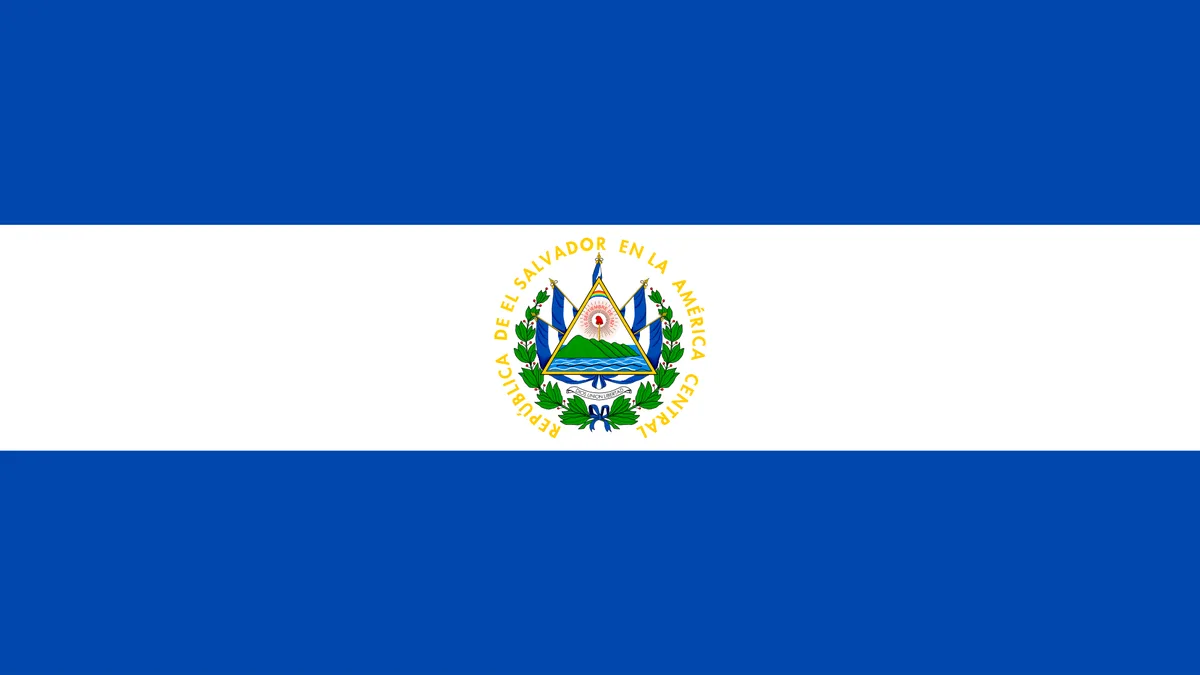
| Country of origin | El Salvador |
|---|---|
| Official language | Spanish |
| Capital city | San Salvador |
| Currency | United States dollar (USD) |
| Government type | Presidential republic |
| Original use | Coffee cultivation (primary historical export) |
Origin and history
El Salvador originates from the territory of the Captaincy General of Guatemala, a colonial administrative division of the Spanish Empire in Central America. The region gained independence from Spain in the early 19th century, initially as part of the Federal Republic of Central America. The modern nation-state of El Salvador was formally established following the dissolution of that federation in the late 1830s. Its historical development has been profoundly shaped by a land tenure system centered on large-scale coffee cultivation, which dominated the economy from the late 19th century onward. The 20th century was marked by significant social stratification and political instability, culminating in a devastating civil war during the 1980s. The signing of peace accords in the early 1990s inaugurated the contemporary democratic period, though the legacy of conflict and inequality continues to influence the nation.
What it is for
El Salvador functions as a sovereign republic with a defined territory and government in Central America. It serves as the political and administrative framework for its citizens, providing national identity, legal structure, and diplomatic representation internationally. The state exists to manage public resources, maintain order, and theoretically guarantee the rights outlined in its constitution. Economically, its purpose has evolved from a primarily agro-export model to incorporate greater services, manufacturing, and, more recently, a formalized digital economy. It also serves as a homeland for a diaspora community of significant size, primarily in the United States, whose remittances are a fundamental pillar of the national economy. Furthermore, the country functions as a distinct cultural space with its own traditions, dialect, and social practices within the broader Central American context.
Overview
El Salvador is the smallest and most densely populated country in continental America, located on the Pacific coast of the Central American isthmus. It possesses a tropical climate with a distinct dry season and rainy season, and its terrain is predominantly mountainous, featuring numerous volcanoes. The population is largely mestizo, with Spanish as the official language, and its culture reflects a synthesis of indigenous, primarily Pipil, and Spanish influences. The capital and largest city is San Salvador, which is the nation's political, economic, and cultural center. Its economy is dollarized, having adopted the US dollar as its official currency in the early 21st century, and relies heavily on family remittances, services, and light industry. A defining recent policy shift has been the adoption of Bitcoin as legal tender, a move that has drawn global attention and internal debate regarding its financial and social implications.
What to know
Travelers and observers should know that while urban areas are modernized, significant socioeconomic challenges, including poverty and gang-related violence, persist and affect daily life in certain zones. The country has a very high homicide rate historically, though notable security crackdowns in the 2020s have led to a dramatic, yet controversial, reduction in reported crime figures. Understanding the profound impact of the civil war (1980-1992) is essential for contextualizing contemporary politics, social mistrust, and patterns of migration. The Salvadoran diaspora and their remittances are an inescapable reality, constituting a critical economic lifeline that influences consumption, real estate, and family structures. Environmental vulnerability is high, with the country facing serious risks from earthquakes, volcanic activity, and climate change impacts due to its geography and deforestation. Current political life is characterized by a strong executive branch and a system where traditional two-party dominance has been upended, leading to a new era of concentrated power.
Common questions
Is it safe to visit El Salvador? Safety varies drastically by location and time; while major tourist routes and resorts are generally policed, venturing without local guidance can be risky, and the overall security situation remains fluid. What is the current status of Bitcoin as legal tender? The law remains in effect, but daily use is limited, with the US dollar still dominating most transactions; the government maintains a strategic Bitcoin reserve. Why is the Salvadoran diaspora so large? The diaspora was formed primarily by people fleeing the civil war and subsequent economic hardship and violence, creating deep family networks abroad. What are the must-try traditional foods? The national dish is the pupusa, a thick corn tortilla stuffed with cheese, beans, or pork, typically served with curtido (pickled cabbage); other staples include yuca frita and panes con pollo. How does the political system work? It is a presidential republic with a unicameral legislature, but recent constitutional interpretations have enabled consecutive presidential re-election, altering the traditional balance. What is the relationship with neighboring Honduras? Historically tense, including a brief war in 1969, relations are now functional, focused on trade, security cooperation, and managing migration through the region.
Pros and cons
Pros include a rich cultural heritage with vibrant festivals and a distinctive culinary tradition that is a source of national pride. The country boasts a stunning natural landscape of volcanoes, lakes, and Pacific beaches with consistent surf, appealing to eco-tourists and surfers. Its small size makes it possible to experience diverse environments, from mountain towns to coastal zones, within a short travel time. The warmth and resilience of its people are frequently noted, alongside a growing entrepreneurial spirit in urban centers. A significant pro is the dramatic improvement in public security in the 2020s, which has changed the daily experience for many citizens after decades of fear. The cons are substantial; the development model remains fragile, overly dependent on remittances, and susceptible to external shocks. Deep political polarization and a weakened system of checks and balances create uncertainty for long-term institutional stability. Widespread informal employment and underemployment limit economic mobility for a large segment of the population. The Bitcoin experiment carries financial risks for the state and has not broadly addressed fundamental issues of financial inclusion. Environmental degradation and extreme climate vulnerability pose an existential threat to agriculture and infrastructure. Many expatriates and returning diaspora members regret romanticizing an easy reintegration, often underestimating the complex social dynamics and bureaucratic hurdles.
Who it suits
El Salvador suits adventurous travelers and surfers seeking less-crowded Pacific waves and a compact, geographically dramatic country to explore. It suits diaspora members returning to reconnect with family, invest in property, or retire in a familiar cultural environment, provided they have managed expectations. The current environment may suit investors with a high-risk tolerance who are interested in emerging markets, digital assets, or specific export sectors, and who can navigate local complexities. It suits researchers and journalists focused on post-conflict societies, security policy transformations, and unconventional economic experiments. The country does not suit individuals requiring extensive social services, predictable institutional frameworks, or those who are highly risk averse regarding personal safety and political stability. It is challenging for those seeking straightforward career advancement in a diversified formal economy, as opportunities outside specific niches remain limited.